The Moon
The Moon is Earth’s only natural satellite—a rocky, cratered body about one‑quarter the diameter of Earth, orbiting at an average distance of approximately 384,400 km. It influences tides, stabilizes Earth’s axial tilt, and was formed about 4.5 billion years ago following a collision between Earth and a Mars-sized object.
Source: science.nasa.gov
APODs including "The Moon"
Water Discovered in Moon Shadow
18/11/2009
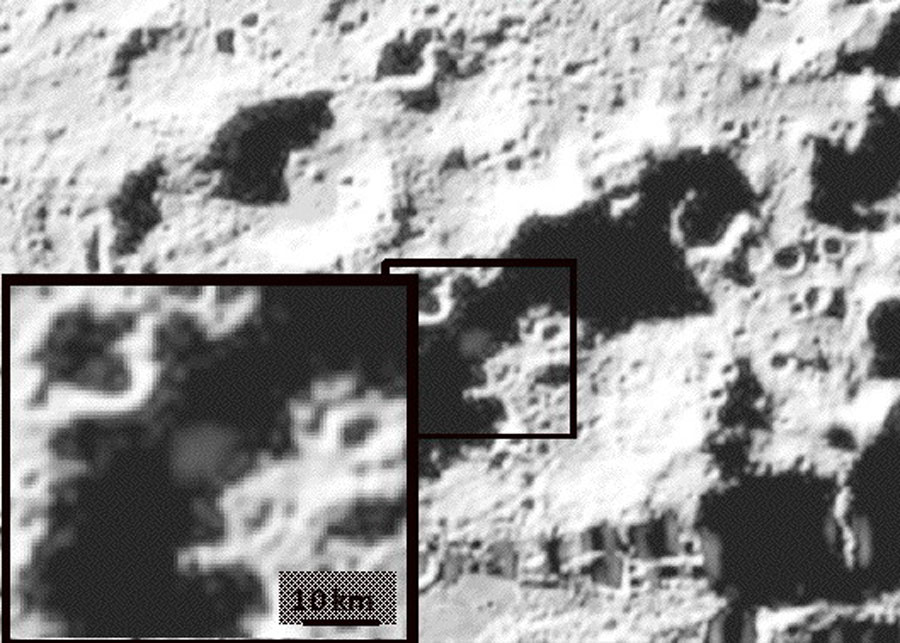
Why is there water on the Moon? Last month, the LCROSS mission crashed a large impactor into a permanently shadowed crater near the Moon's South Pole. A plume of dust rose that was visible to the satellite, although hard to discern from Earth. The plume is shown above in visible light. Last week, the results of a preliminary chemical analysis gave a clear indication that the dust plume contained water. Such water is of importance not only for understanding the history of the Moon, but as a possible reservoir for future astronauts trying to live on the Moon for long periods. The source of the lunar water is now a topic of debate. Possible origins include many small meteorites, a comet, or primordial moon soil.