The Moon
The Moon is Earth’s only natural satellite—a rocky, cratered body about one‑quarter the diameter of Earth, orbiting at an average distance of approximately 384,400 km. It influences tides, stabilizes Earth’s axial tilt, and was formed about 4.5 billion years ago following a collision between Earth and a Mars-sized object.
Source: science.nasa.gov
APODs including "The Moon"
Andes Sunset Eclipse
15/07/2010
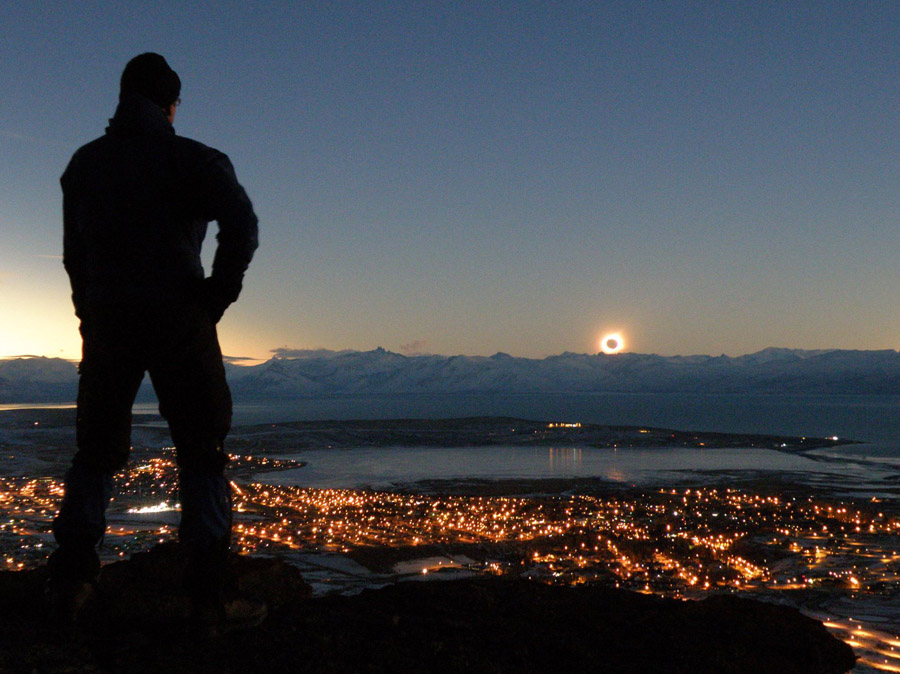
On July 11, after a long trek eastward across the southern Pacific Ocean, the Moon's shadow reached landfall in South America. In a total solar eclipse close to sunset, silhouetted Moon and Sun hugged the western horizon, seen here above the Andes mountains near the continent's southern tip. To enjoy a good vantage point, the photographer hiked to a windy spot about 400 meters above a lake, Lago Argentino, climbing into the picture after setting up his camera on a tripod. At left, the sky outside the shadow cone is still bright. Below, the lights of El Calafate, Patagonia, Argentina, shine by the lake shore.