The Moon
The Moon is Earth’s only natural satellite—a rocky, cratered body about one‑quarter the diameter of Earth, orbiting at an average distance of approximately 384,400 km. It influences tides, stabilizes Earth’s axial tilt, and was formed about 4.5 billion years ago following a collision between Earth and a Mars-sized object.
Source: science.nasa.gov
APODs including "The Moon"
The Solstice Moon's Eclipse
23/12/2010
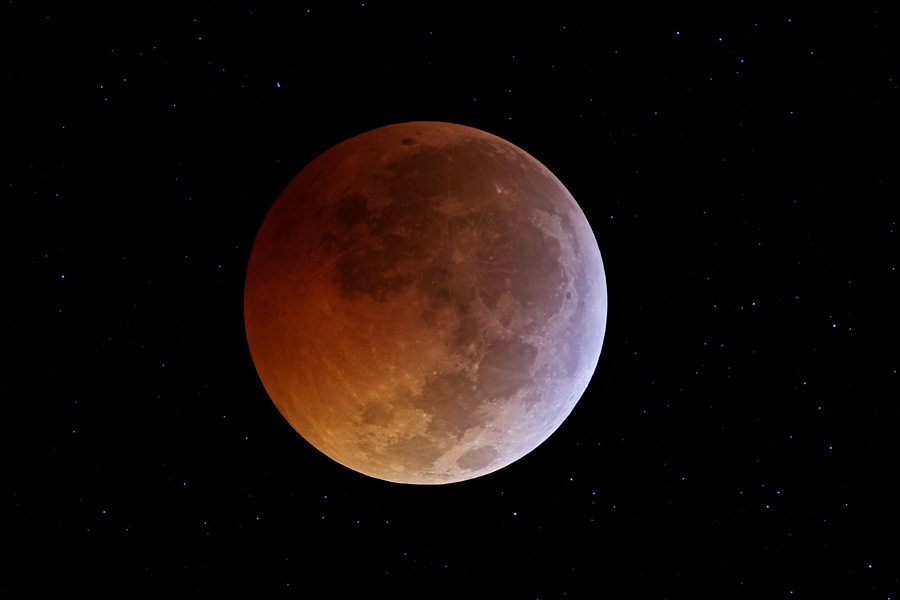
A big, bright, beautiful Full Moon slid into planet Earth's shadow early Tuesday morning. Remarkably, the total lunar eclipse coincided with the date of the December Solstice. During the eclipse, the best viewing in North America found the coppery lunar disc high in a cold winter sky, the Moon reddened by light filtering into the Earth's dark central shadow or umbra. The light comes from all the sunsets and sunrises, seen from a lunar perspective around the edges of a silhouetted Earth. Passing closer to the center of the umbra, the Moon's southern hemisphere (left) appears darker in this eclipse image, recorded from Deerlick Astronomy Village, Georgia, USA. The picture is a digital composite, a separate longer exposure added to an eclipse frame to capture the surrounding star field.