The Moon
The Moon is Earth’s only natural satellite—a rocky, cratered body about one‑quarter the diameter of Earth, orbiting at an average distance of approximately 384,400 km. It influences tides, stabilizes Earth’s axial tilt, and was formed about 4.5 billion years ago following a collision between Earth and a Mars-sized object.
Source: science.nasa.gov
APODs including "The Moon"
Auroral Substorm over Yellowknife
25/03/2011
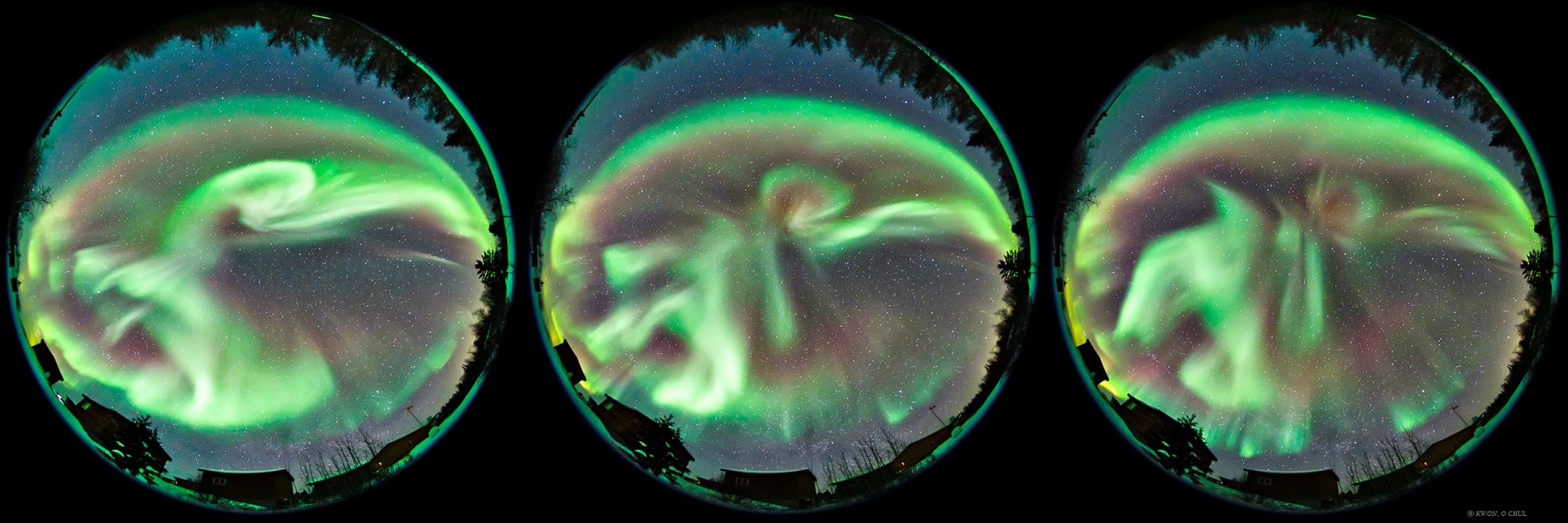
Intense auroral activity flooded the night with shimmering colors on February 24, captured here from a lodge near the city of Yellowknife in northern Canada. The stunning sequence (left to right) of three all-sky exposures, taken at 30 second intervals, shows rapid changes in dancing curtains of northern lights against a starry background. What makes the northern lights dance? Measurements by NASA's fleet of THEMIS spacecraft indicate that these explosions of auroral activity are driven by sudden releases of energy in the Earth's magnetosphere called magnetic reconnection events. The reconnection events release energy when magnetic field lines snap like rubber bands, driving charged particles into the upper atmosphere. Stretching into space, these reconnection events occur in the magnetosphere on the Earth's night side at a distance about 1/3 of the way to the Moon.