The Moon
The Moon is Earth’s only natural satellite—a rocky, cratered body about one‑quarter the diameter of Earth, orbiting at an average distance of approximately 384,400 km. It influences tides, stabilizes Earth’s axial tilt, and was formed about 4.5 billion years ago following a collision between Earth and a Mars-sized object.
Source: science.nasa.gov
APODs including "The Moon"
Castle and Meteor by Moonlight
13/08/2011
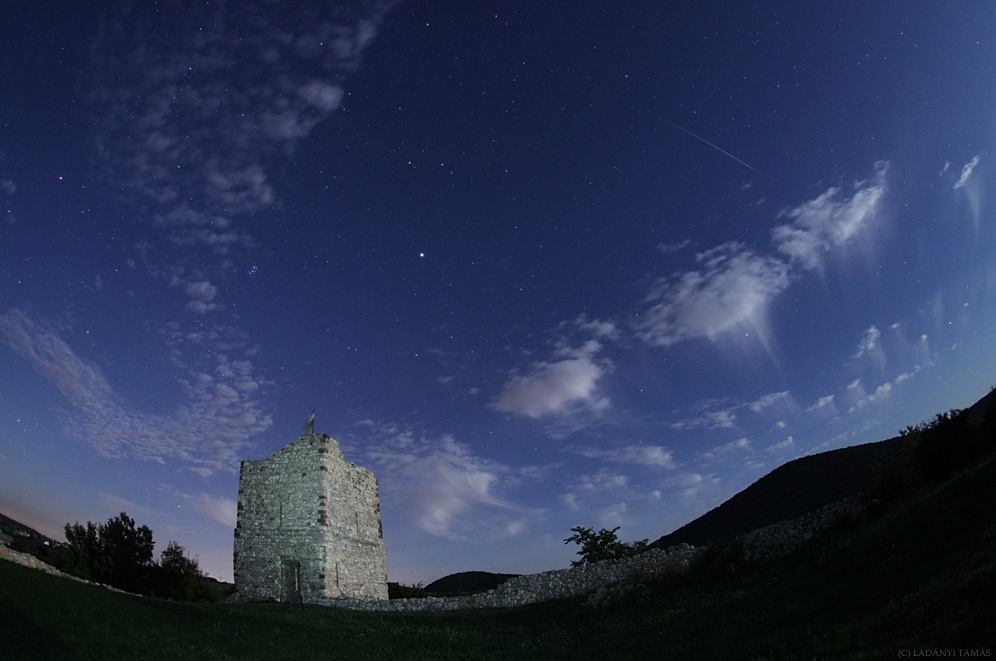
ch August, as planet Earth swings through dust trailing along the orbit of periodic comet Swift-Tuttle, skygazers enjoy the Perseid Meteor Shower. As Earth moves through the denser part of the comet's wide dust trail this year's shower peaks around 6:00 UT August 13 (this morning), when light from a nearly full Moon masks all but the brighter meteor streaks. Still, Perseid meteors can be spotted in the days surrounding the peak. Moonlight and a Perseid meteor created this gorgeous skyscape, recorded in a simple, single, 10 second long exposure on the morning of August 12. Below the moonlit clouds in the foreground are the ruins of a medieval castle near Veszprem, Hungary, seen against the Bakony mountain range. In the night sky above the clouds, the Perseid meteor's trail is joined by bright planet Jupiter near the center of the frame along with the lovely Pleiades star cluster at the left.