The Moon
The Moon is Earth’s only natural satellite—a rocky, cratered body about one‑quarter the diameter of Earth, orbiting at an average distance of approximately 384,400 km. It influences tides, stabilizes Earth’s axial tilt, and was formed about 4.5 billion years ago following a collision between Earth and a Mars-sized object.
Source: science.nasa.gov
APODs including "The Moon"
The New Moon in the Old Moon's Arms
24/03/2012
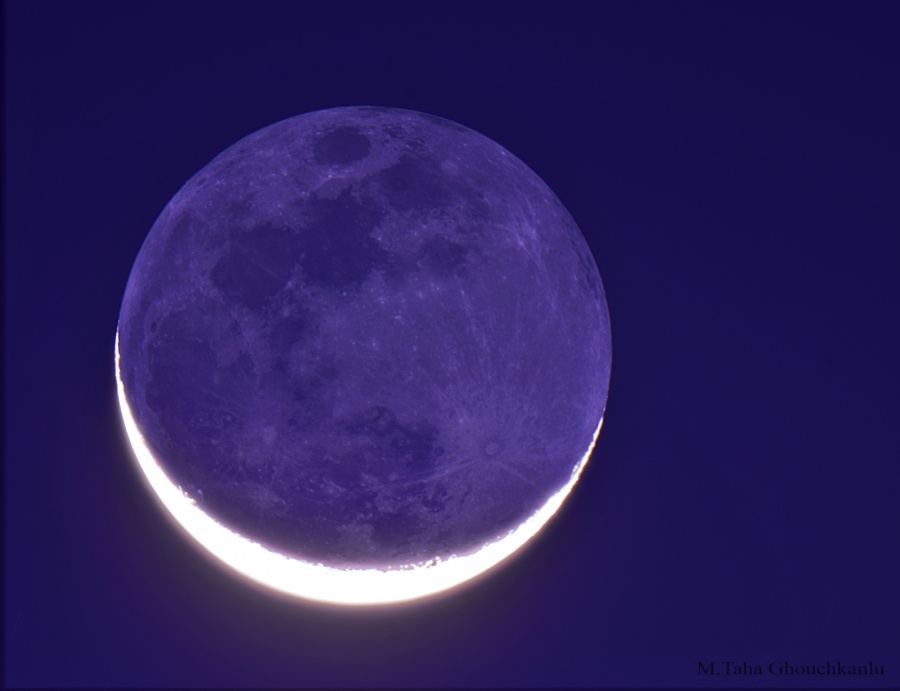
Also known as the Moon's ashen glow, Earthshine is Earthlight illuminating the Moon's night side. Taken on Nowruz, the March 20 equinox, from Esfahan, Iran, planet Earth, this telescopic image captures strong Earthshine from an old Moon. The darker earthlit disk is in the arms of a bright sunlit crescent. But the view from the Moon would have been enchanting too. When the Moon appears in Earth's sky as a slender crescent, a dazzlingly bright, nearly full Earth would be seen from the lunar surface. The Earth's brightness due to reflected sunlight is known to be strongly influenced by cloud cover. Still, a description of Earthshine, in terms of sunlight reflected by Earth's oceans in turn illuminating the Moon's dark surface, was written 500 years ago by Leonardo da Vinci.