The Moon
The Moon is Earth’s only natural satellite—a rocky, cratered body about one‑quarter the diameter of Earth, orbiting at an average distance of approximately 384,400 km. It influences tides, stabilizes Earth’s axial tilt, and was formed about 4.5 billion years ago following a collision between Earth and a Mars-sized object.
Source: science.nasa.gov
APODs including "The Moon"
On a Blue Moon
01/09/2012
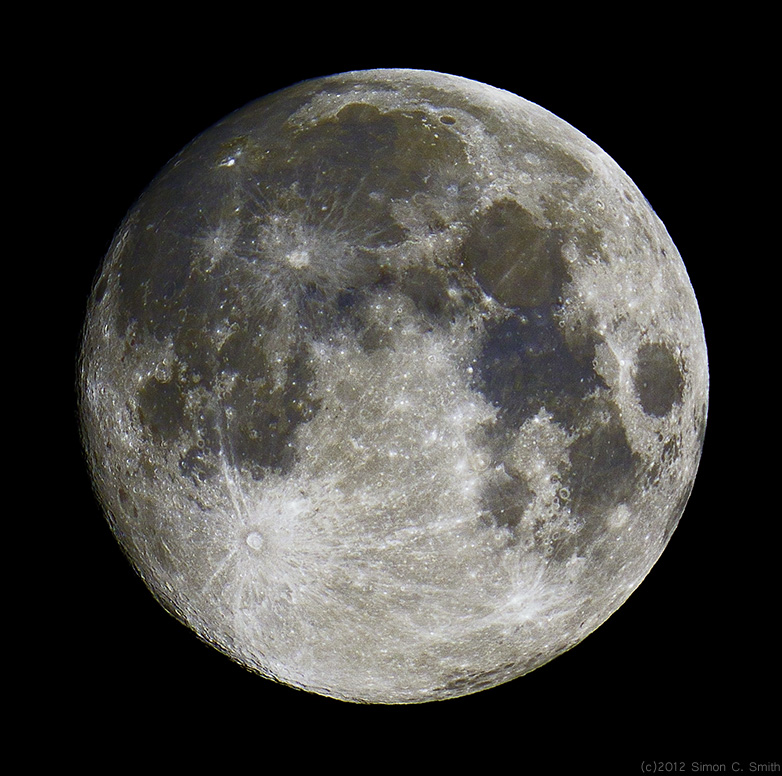
Rising at sunset, the gorgeous Full Moon of August 31 became the second Full Moon in a month. According to modern reckoning, that makes it a Blue Moon. In fact, parts of the Full Moon do look a little blue in this sharp lunar portrait. Taken just hours before the exact full phase in delightfully clear skies over Nottingham, UK, it features eye-catching bright rays extending from the prominent young crater Tycho in the Moon's southern hemisphere. The slightly color enhanced image also brings out subtle shades of blue, a real characteristic of terrain with a high content of titanium oxide and iron. The blue lunar terrain on the right includes the dark flat expanse of the Sea of Tranquility and the Apollo 11 landing site. Gallery: Blue Moon