The Moon
The Moon is Earth’s only natural satellite—a rocky, cratered body about one‑quarter the diameter of Earth, orbiting at an average distance of approximately 384,400 km. It influences tides, stabilizes Earth’s axial tilt, and was formed about 4.5 billion years ago following a collision between Earth and a Mars-sized object.
Source: science.nasa.gov
APODs including "The Moon"
Umbra World
14/12/2012
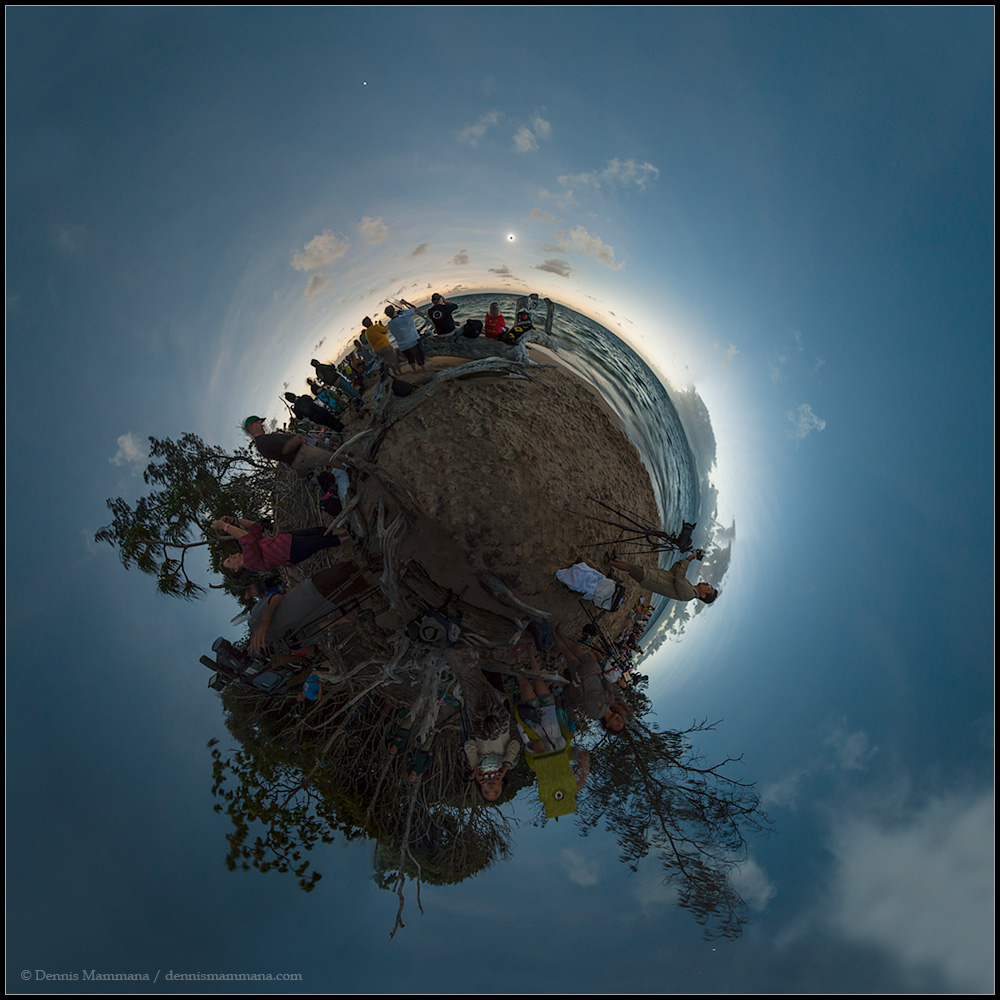
On the morning of November 14, sky gazers from around the world gathered on this little planet to stand in the dark umbral shadow of the Moon. Of course, the Moon cast the shadow during last month's total solar eclipse, and the little planet is actually a beach on Green Island off the coast of Queensland, Australia. The picture itself, the first little planet projection of a total solar eclipse, is a digitally warped and stitched wrap-around of 8 images covering 360x180 degrees. To make it, the intrepid photographer had to remember to shoot both toward and away(!) from the eclipse during the excitement of totality. Near this little planet's horizon, the eclipsed Sun is just above center, surrounded by the glowing solar corona. Venus can be spotted in the shadow-darkened sky toward the top of the frame. At bottom right, bright star Sirius shines at the tip of an alarmingly tall tree.