The Moon
The Moon is Earth’s only natural satellite—a rocky, cratered body about one‑quarter the diameter of Earth, orbiting at an average distance of approximately 384,400 km. It influences tides, stabilizes Earth’s axial tilt, and was formed about 4.5 billion years ago following a collision between Earth and a Mars-sized object.
Source: science.nasa.gov
APODs including "The Moon"
Hungarian Spring Eclipse
04/05/2013
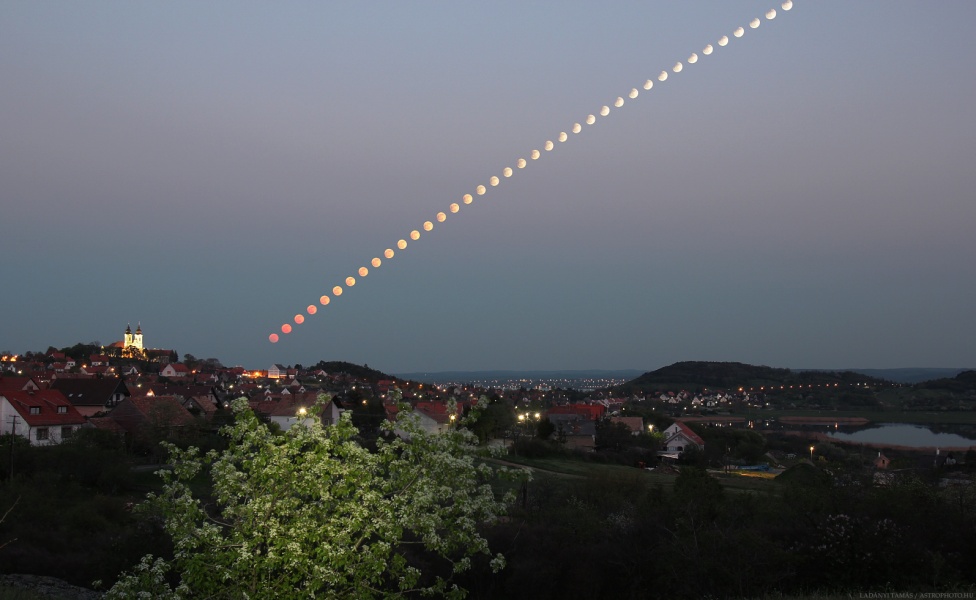
Last week, as the Sun set a Full Moon rose over the springtime landscape of Tihany, Hungary on the northern shores of Lake Balaton. As it climbed into the clear sky, the Moon just grazed the dark, umbral shadow of planet Earth in the year's first partial lunar eclipse. The partial phase, seen near the top of this frame where the lunar disk is darkened along the upper limb, lasted for less than 27 minutes. Composited from consecutive exposures, the picture presents the scene's range of natural colors and subtle shading apparent to the eye. At next week's New Moon, the season's celestial shadow play will continue with an annular solar eclipse, the path of annularity tracking through northern Australia and the central Pacific.