The Moon
The Moon is Earth’s only natural satellite—a rocky, cratered body about one‑quarter the diameter of Earth, orbiting at an average distance of approximately 384,400 km. It influences tides, stabilizes Earth’s axial tilt, and was formed about 4.5 billion years ago following a collision between Earth and a Mars-sized object.
Source: science.nasa.gov
APODs including "The Moon"
A Colorful Moon
19/12/2013
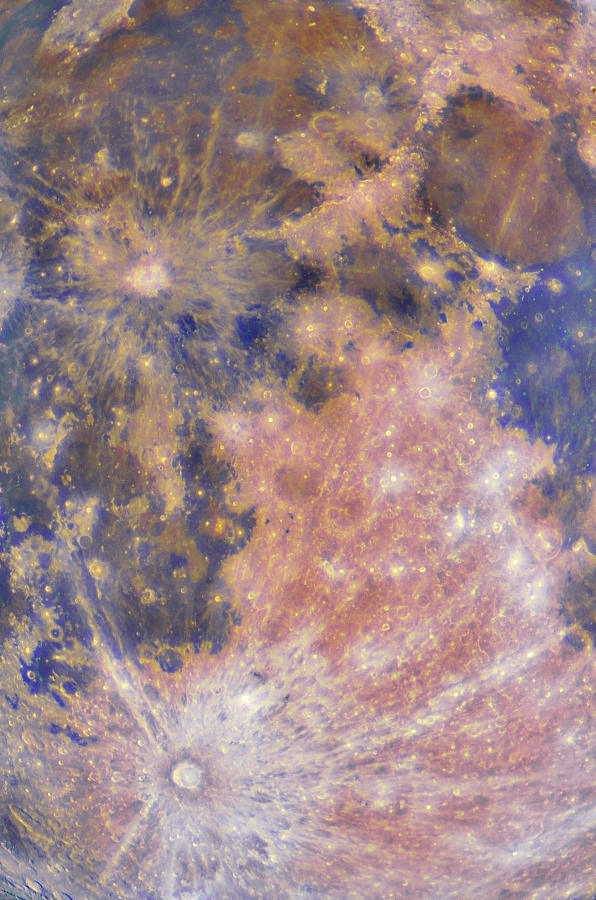
The Moon is normally seen in subtle shades of grey or yellow. But small, measurable color differences have been greatly exaggerated to make this telescopic, multicolored, moonscape captured during the Moon's full phase. The different colors are recognized to correspond to real differences in the chemical makeup of the lunar surface. Blue hues reveal titanium rich areas while orange and purple colors show regions relatively poor in titanium and iron. The familiar Sea of Tranquility, or Mare Tranquillitatis, is the blue area in the upper right corner of the frame. White lines radiate across the orange-hued southern lunar highlands from 85 kilometer wide ray crater Tycho at bottom left. Above it, darker rays from crater Copernicus extend into the Sea of Rains (Mare Imbrium) at the upper left. Calibrated by rock samples from the Apollo missions, similar multicolor images from spacecraft have been used to explore the Moon's global surface composition.