The Moon
The Moon is Earth’s only natural satellite—a rocky, cratered body about one‑quarter the diameter of Earth, orbiting at an average distance of approximately 384,400 km. It influences tides, stabilizes Earth’s axial tilt, and was formed about 4.5 billion years ago following a collision between Earth and a Mars-sized object.
Source: science.nasa.gov
APODs including "The Moon"
Alicante Beach Moonrise
19/07/2014
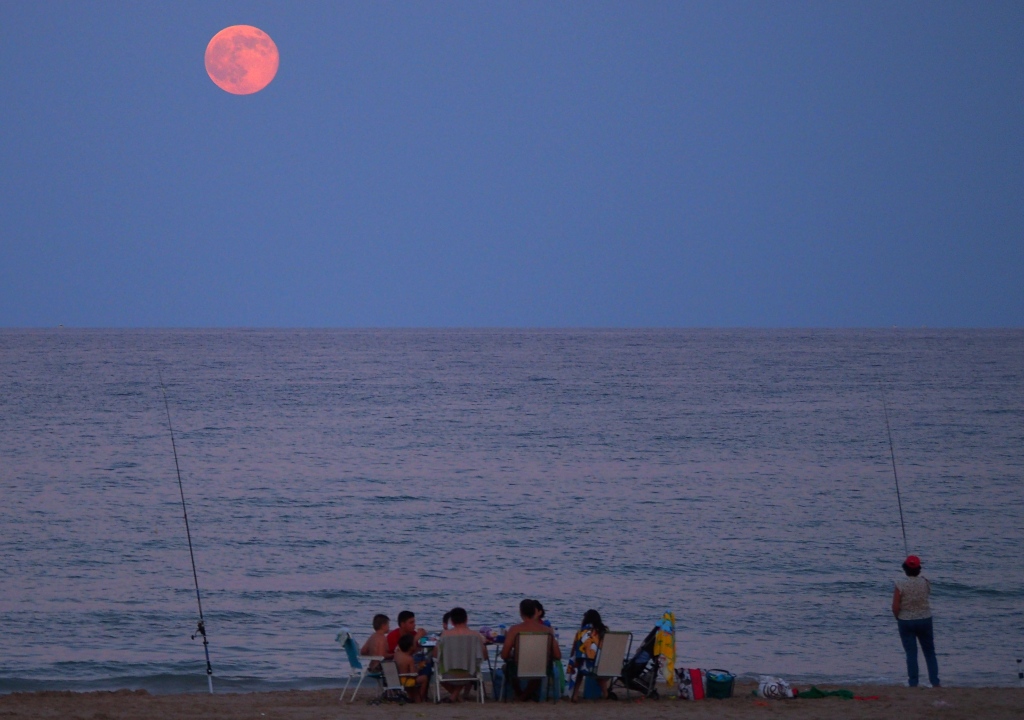
In this beach and skyscape from Alicante, Spain, July's Full Moon shines in the dark blue twilight, its reflection coloring the Mediterranean waters. Near the horizon, the moonlight is reddened by its long path through the atmosphere, but this Full Moon was also near perigee, the closest point to Earth along the Moon's elliptical orbit. That made it a Supermoon, a mighty 14% larger and 30% brighter than a Full Moon at apogee, the Moon's farthest orbital swing. Of course, most warm summer nights are a good time to enjoy a family meal oceanside, but what fish do you catch on the night of a Supermoon? They must be Moon breams ...