The Moon
The Moon is Earth’s only natural satellite—a rocky, cratered body about one‑quarter the diameter of Earth, orbiting at an average distance of approximately 384,400 km. It influences tides, stabilizes Earth’s axial tilt, and was formed about 4.5 billion years ago following a collision between Earth and a Mars-sized object.
Source: science.nasa.gov
APODs including "The Moon"
Earth During a Total Eclipse of the Sun
18/03/2015
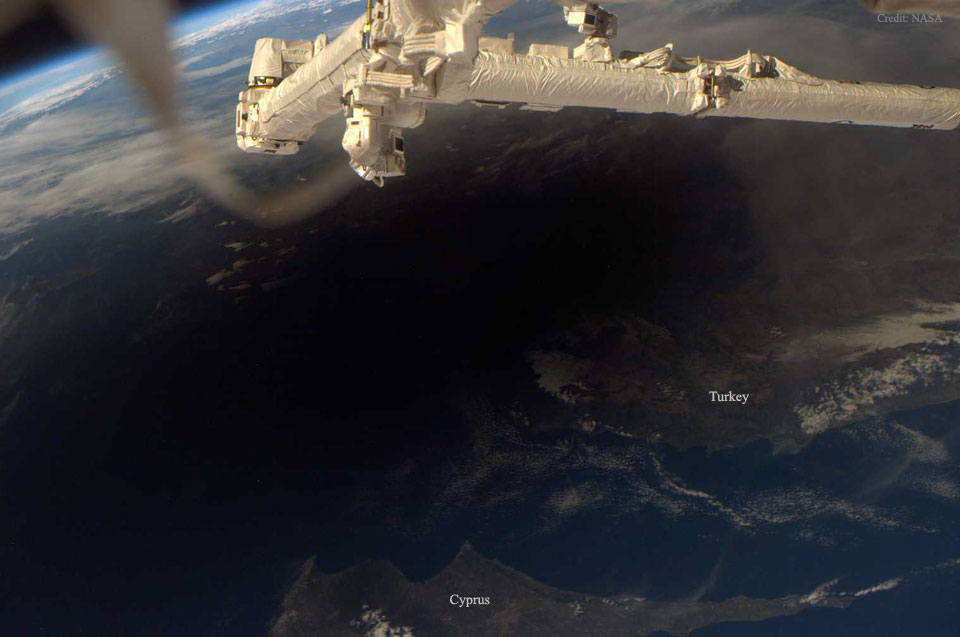
What does the Earth look like during a total solar eclipse? It appears dark in the region where people see the eclipse, because that's where the shadow of the Moon falls. The shadow spot actually shoots across the Earth at nearly 2,000 kilometers per hour, darkening locations in its path for only a few minutes before moving on. The featured image shows the Earth during the total solar eclipse of 2006 March, as seen from the International Space Station. On Friday the Moon will move in front of the Sun once again, casting another distorted circular shadow that, this time, will zip over part of the north Atlantic Ocean.