The Moon
The Moon is Earth’s only natural satellite—a rocky, cratered body about one‑quarter the diameter of Earth, orbiting at an average distance of approximately 384,400 km. It influences tides, stabilizes Earth’s axial tilt, and was formed about 4.5 billion years ago following a collision between Earth and a Mars-sized object.
Source: science.nasa.gov
APODs including "The Moon"
Lunar Shadow Transit
11/03/2016
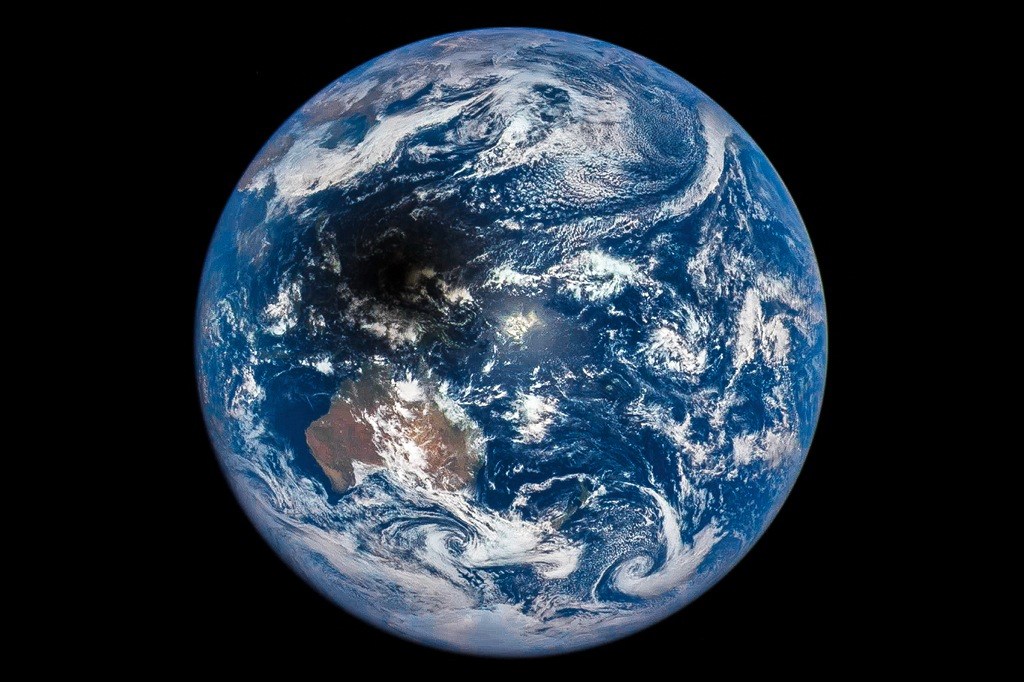
This snapshot from deep space captures planet Earth on March 9. The shadow of its large moon is falling on the planet's sunlit hemisphere. Tracking toward the east (left to right) across the ocean-covered world the moon shadow moved quickly in the direction of the planet's rotation. Of course, denizens of Earth located close to the shadow track centerline saw this lunar shadow transit as a brief, total eclipse of the Sun. From a spacebased perspective between Earth and Sun, the view of this shadow transit was provided by the Deep Space Climate Observatory (DSCOVR) spacecraft's Earth Polychromatic Imaging Camera (EPIC).