The Moon
The Moon is Earth’s only natural satellite—a rocky, cratered body about one‑quarter the diameter of Earth, orbiting at an average distance of approximately 384,400 km. It influences tides, stabilizes Earth’s axial tilt, and was formed about 4.5 billion years ago following a collision between Earth and a Mars-sized object.
Source: science.nasa.gov
APODs including "The Moon"
Full Moon over Brno
16/09/2016
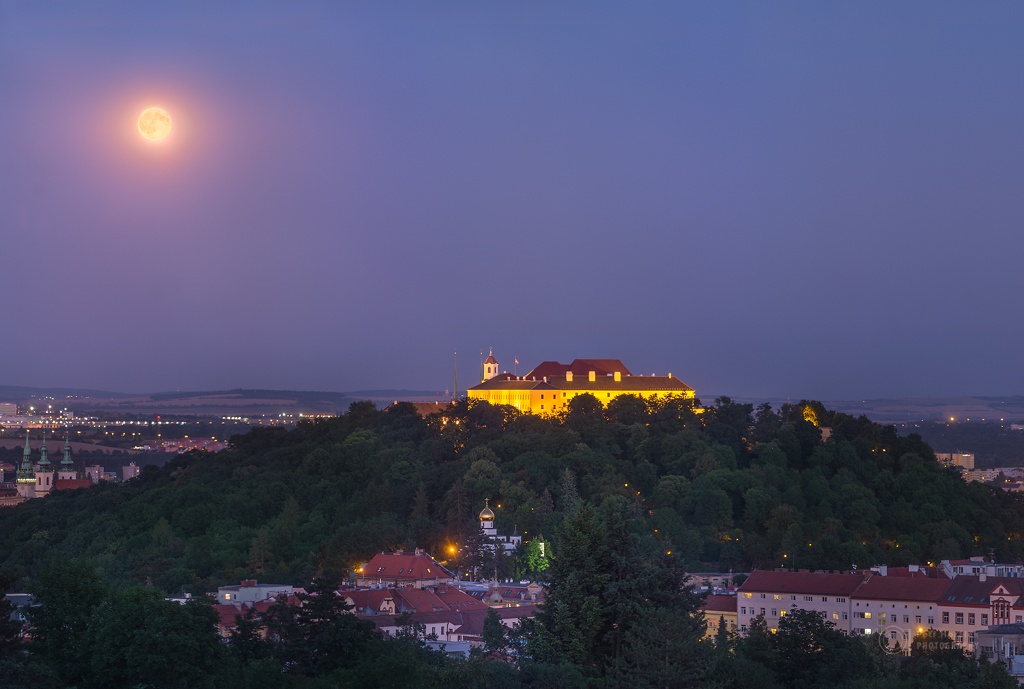
After sunset this gorgeous full moon rose over Brno city in the Czech Republic on July 20, 2016. The panoramic image was made during a celebration of the 47th anniversary of the Apollo 11 lunar landing. A series of exposures captures the yellow hued lunar disk against the fading colors of twilight, with the 14th century Spilberk castle illuminated in the foreground. Of course, tonight's full moon is called the Harvest Moon. The closest full moon to the northern hemisphere's autumnal equinox, its traditional name has long been celebrated in story and song. Tonight's full lunar phase also coincides with a subtle, penumbral lunar eclipse, the Moon passing only through the Earth's diffuse, outer shadow.