The Moon
The Moon is Earth’s only natural satellite—a rocky, cratered body about one‑quarter the diameter of Earth, orbiting at an average distance of approximately 384,400 km. It influences tides, stabilizes Earth’s axial tilt, and was formed about 4.5 billion years ago following a collision between Earth and a Mars-sized object.
Source: science.nasa.gov
APODs including "The Moon"
The Bull's Eye and the Young Moon
05/05/2017
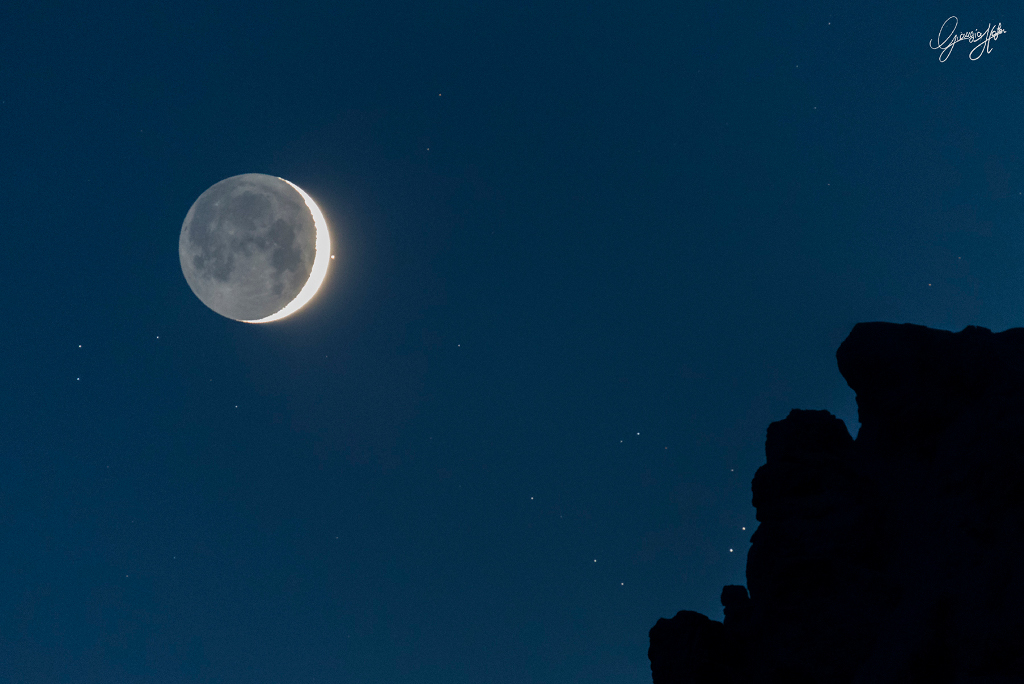
Aldebaran, eye of Taurus the Bull, and a young crescent Moon shared an early evening sky last Friday. The lovely celestial pairing could be enjoyed around planet Earth, but from some locations the Moon was even seen to pass in front of Aldebaran, a dramatic lunar occultation of the familiar bright star. Taken at nightfall on April 28, this skyscape captures Aldebaran shortly after it emerged from behind the bright lunar limb. In the foreground are craggy peaks of the Dolomite mountains near Laggio di Cadore, Italy. Before reappearing beyond the sunlit crescent, Aldebaran first winked out behind the Moon's ashen glow, the lunar nightside faintly illuminated by earthshine.