The Moon
The Moon is Earth’s only natural satellite—a rocky, cratered body about one‑quarter the diameter of Earth, orbiting at an average distance of approximately 384,400 km. It influences tides, stabilizes Earth’s axial tilt, and was formed about 4.5 billion years ago following a collision between Earth and a Mars-sized object.
Source: science.nasa.gov
APODs including "The Moon"
Full Moon and Boston Light
13/07/2017
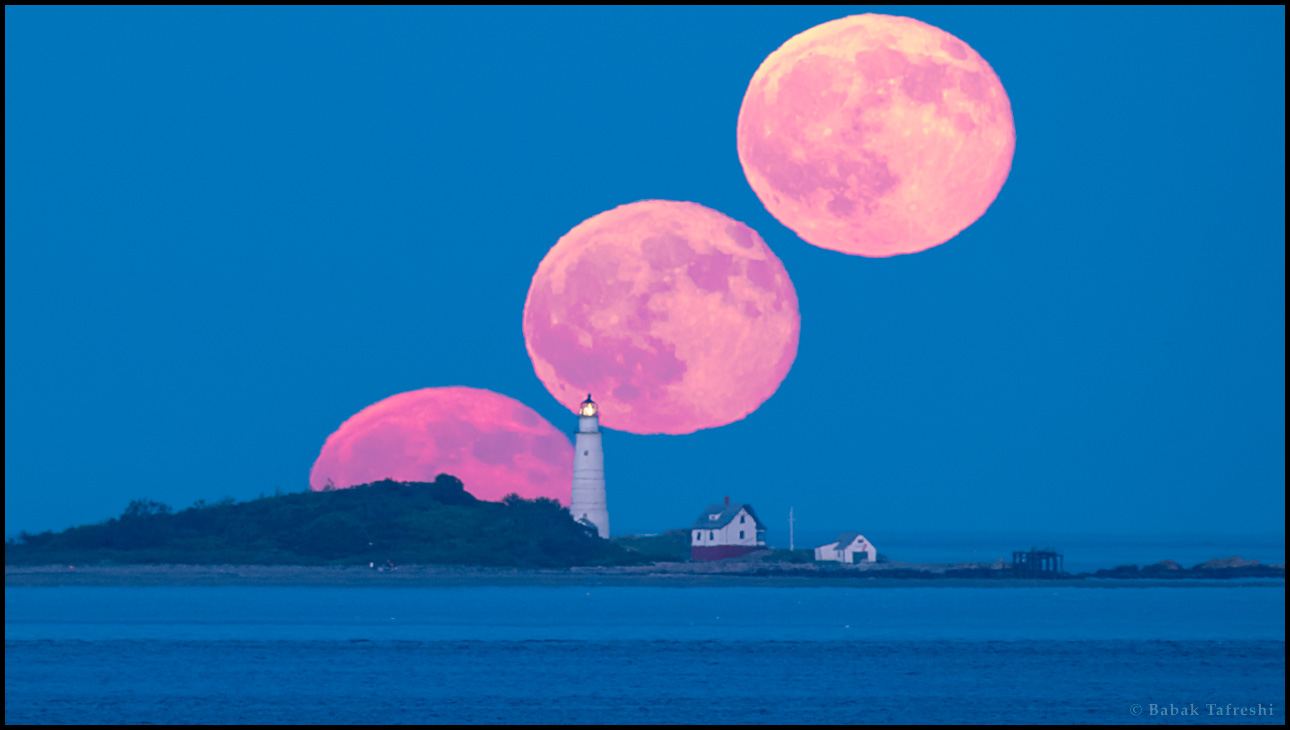
This well-planned telephoto timelapse captures July's Full Moon rise across outer Boston Harbor, Massachusetts, planet Earth. In the foreground, the historic terrestrial beacon is known as Boston Light. July's Full Moon is known to some as a Thunder Moon, likely a reference to the sounds of the northern summer month's typically stormy weather. But the eastern sky was clear for this video sequence. Near the horizon, the long sight-line through atmospheric layers filters and refracts the moonlight, causing the rising Moon's reddened color, ragged edges and distorted shape.