The Moon
The Moon is Earth’s only natural satellite—a rocky, cratered body about one‑quarter the diameter of Earth, orbiting at an average distance of approximately 384,400 km. It influences tides, stabilizes Earth’s axial tilt, and was formed about 4.5 billion years ago following a collision between Earth and a Mars-sized object.
Source: science.nasa.gov
APODs including "The Moon"
The Prague Astronomical Clock
07/11/2017
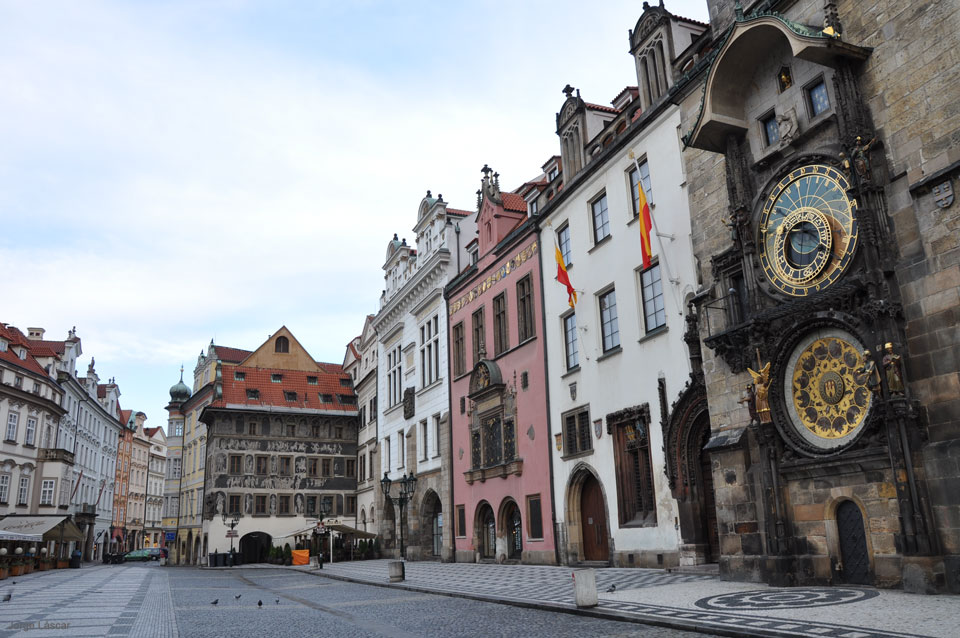
In the center of Prague there's a clock the size of a building. During the day, crowds gather to watch the show when it chimes in a new hour. The Prague Astronomical Clock's face is impressively complex, giving not only the expected time with respect to the Sun (solar time), but the time relative to the stars (sidereal time), the times of sunrise and sunset at several latitudes including the equator, the phase of the Moon, and much more. The clock began operation in 1410, and even though much of its inner workings have been modernized several times, original parts remain. Below the clock is a nearly-equal sized solar calendar that rotates only once a year. Pictured, the Prague Astronomical Clock was photographed alone during an early morning in 2009 March. The Prague Astronomical Clock and the Old Town Tower behind it are currently being renovated once again, with the clock expected to be restarted in 2018 June.