The Moon
The Moon is Earth’s only natural satellite—a rocky, cratered body about one‑quarter the diameter of Earth, orbiting at an average distance of approximately 384,400 km. It influences tides, stabilizes Earth’s axial tilt, and was formed about 4.5 billion years ago following a collision between Earth and a Mars-sized object.
Source: science.nasa.gov
APODs including "The Moon"
Total Lunar Eclipse at Moonset
19/01/2019
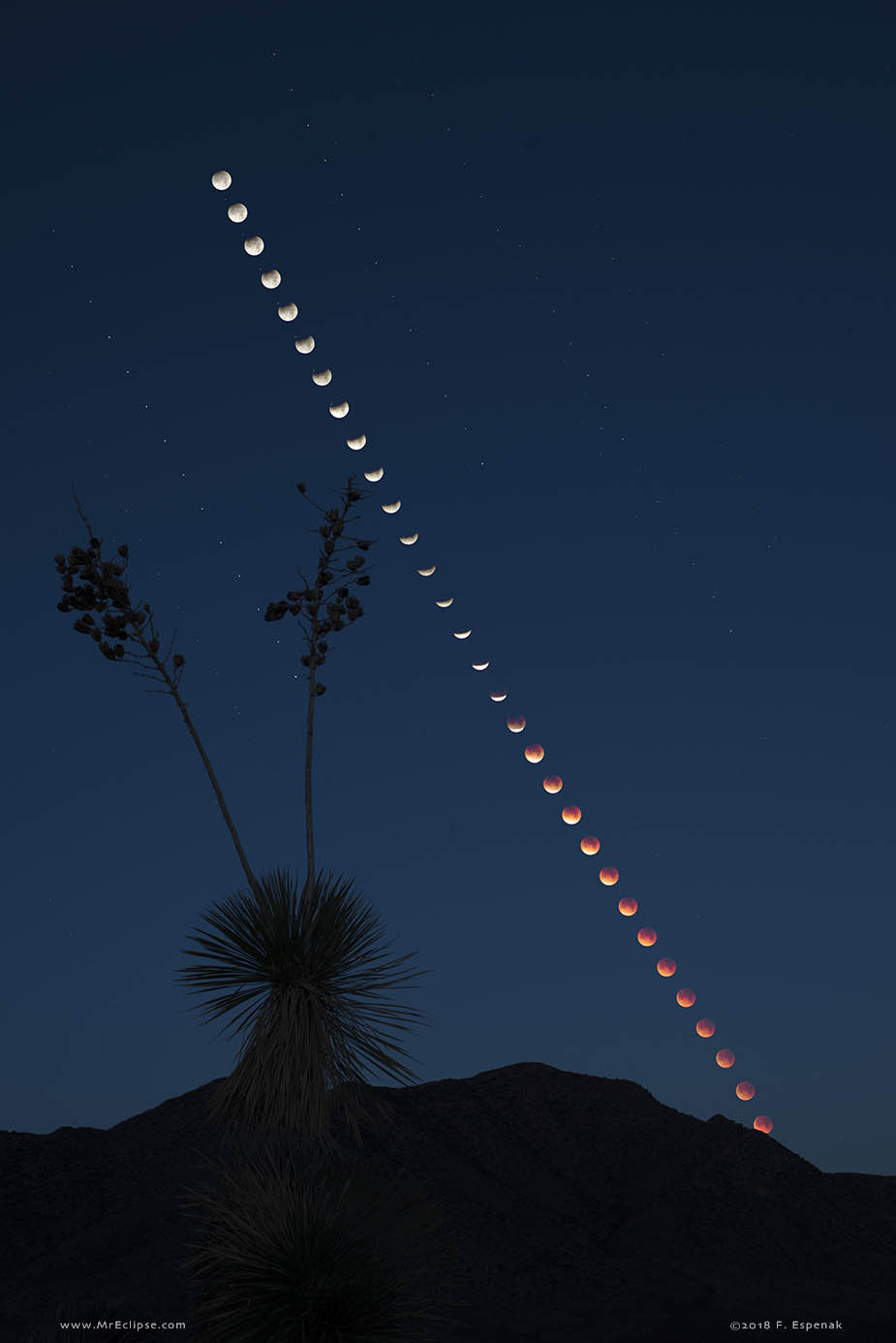
The Moon slid through Earth's shadow on January 31, 2018 in a total lunar eclipse. In this time-lapse sequence of that eclipse from Portal, Arizona, USA, the partial eclipse starts with the Moon high in the western sky. The eclipse total phase lasted about 76 minutes, but totality ended after the dark, reddened Moon set below the horizon. The upcoming total lunar eclipse, on the night of January 20/21, will be better placed for skygazers across the Americas, though. There, all 62 minutes of the total phase, when the Moon is completely immersed in Earth's dark umbral shadow, will take place with the Moon above the horizon. Watch it if you can. The next total lunar eclipse visible from anywhere on planet Earth won't take place until May 26, 2021, and then the total eclipse will last a mere 15 minutes.