The Moon
The Moon is Earth’s only natural satellite—a rocky, cratered body about one‑quarter the diameter of Earth, orbiting at an average distance of approximately 384,400 km. It influences tides, stabilizes Earth’s axial tilt, and was formed about 4.5 billion years ago following a collision between Earth and a Mars-sized object.
Source: science.nasa.gov
APODs including "The Moon"
Matterhorn, Moon, and Meteor
24/01/2019
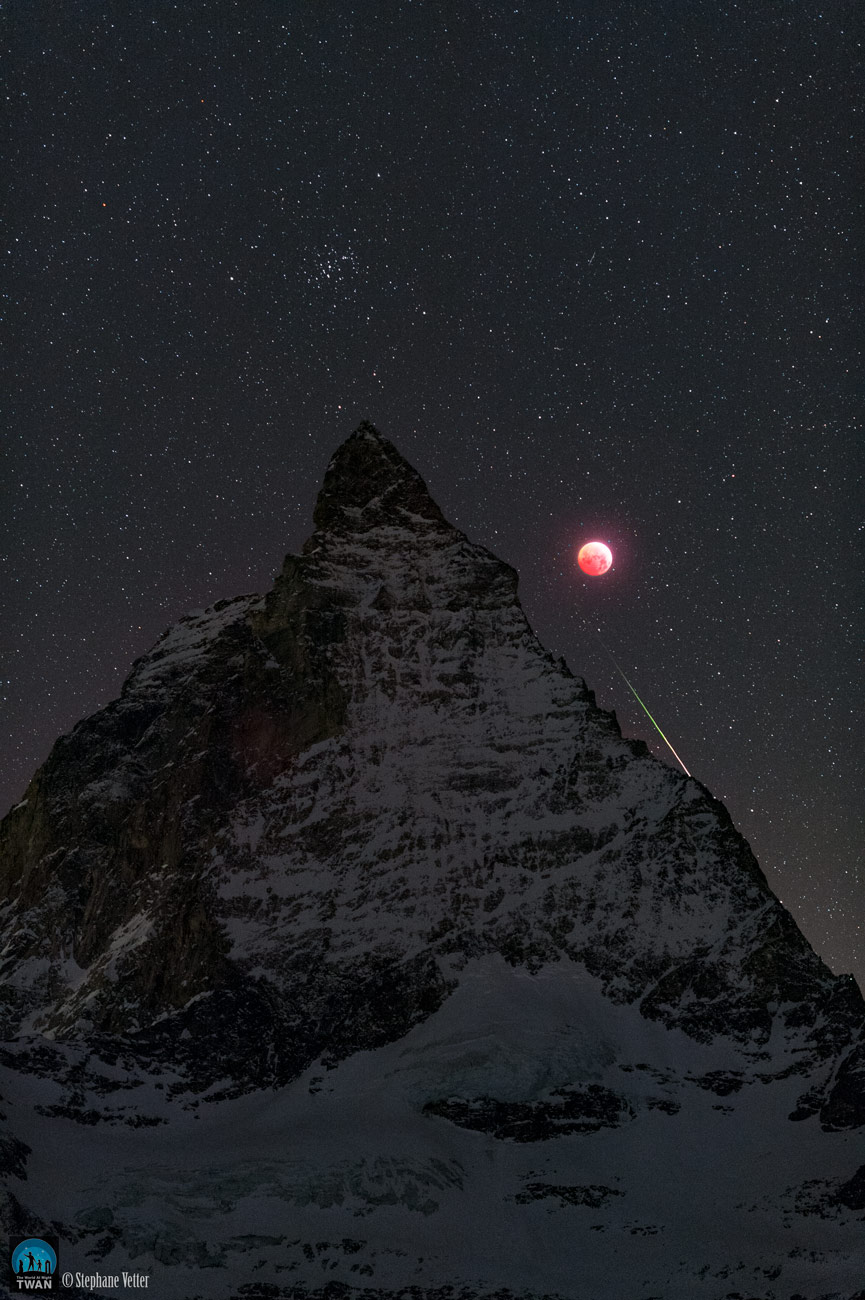
Fans of planet Earth probably recognize the Matterhorn in the foreground of this night skyscape. Famed in mountaineering history, the 4,478 meter Alpine mountain stands next to the totally eclipsed Moon. In spite of -22 degree C temperatures, the inspired scene was captured on the morning of January 21 from the mountains near Zermatt, Switzerland. Different exposures record the dim red light reflected by the Moon fully immersed in Earth's shadow. Seen directly above the famous Alpine peak, but about 600 light-years away, are the stars of the Praesepe or Beehive star cluster also known as Messier 44. An added reward to the cold eclipse vigil, a bright and colorful meteor flashed below the temporarily dimmmed Moon, just tracing the Matterhorn's north-eastern climbing route along Hornli ridge.