The Moon
The Moon is Earth’s only natural satellite—a rocky, cratered body about one‑quarter the diameter of Earth, orbiting at an average distance of approximately 384,400 km. It influences tides, stabilizes Earth’s axial tilt, and was formed about 4.5 billion years ago following a collision between Earth and a Mars-sized object.
Source: science.nasa.gov
APODs including "The Moon"
Saturn and the Da Vinci Glow
04/05/2019
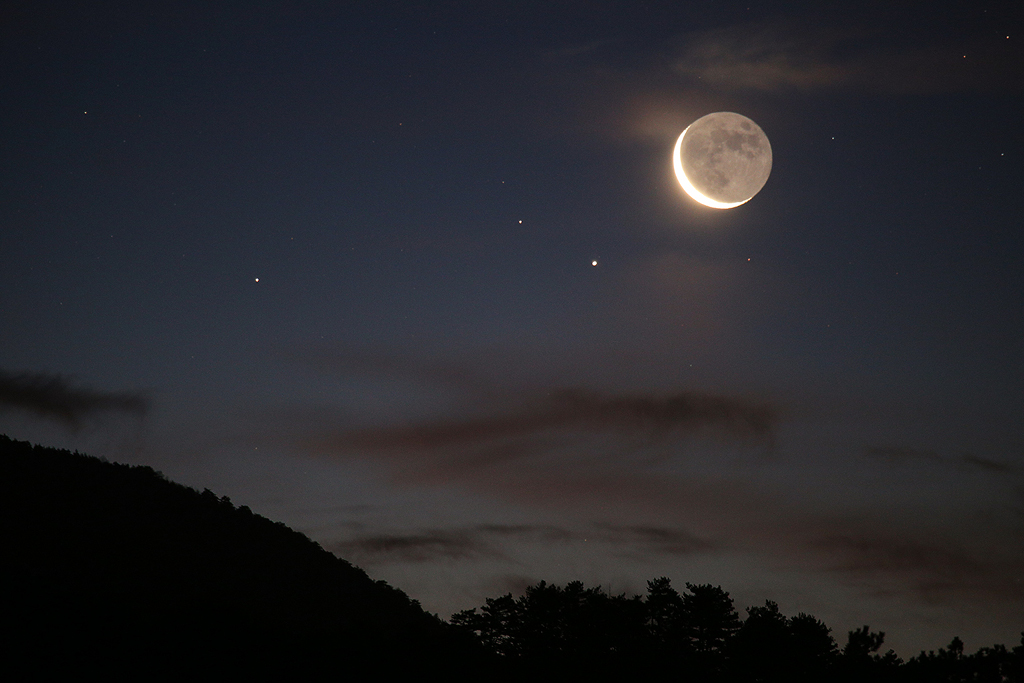
On February 2nd early morning risers saw Saturn near an old Moon low on the eastern horizon. On that date bright planet, sunlit crescent, and faint lunar night side were captured in this predawn skyscape from Bursa, Turkey. Of course the Moon's ashen glow is earthshine, earthlight reflected from the Moon's night side. A description of earthshine, in terms of sunlight reflected by Earth's oceans illuminating the Moon's dark surface, was written over 500 years ago by Leonardo da Vinci. On May 2nd an old Moon also rose in the predawn twilight. On that date its ashen glow shared the sky with Venus, the brilliant morning star. May 2nd also marked the 500th anniversary of Leonardo's death in 1519.