The Moon
The Moon is Earth’s only natural satellite—a rocky, cratered body about one‑quarter the diameter of Earth, orbiting at an average distance of approximately 384,400 km. It influences tides, stabilizes Earth’s axial tilt, and was formed about 4.5 billion years ago following a collision between Earth and a Mars-sized object.
Source: science.nasa.gov
APODs including "The Moon"
In the Shadow of the Moon
04/07/2019
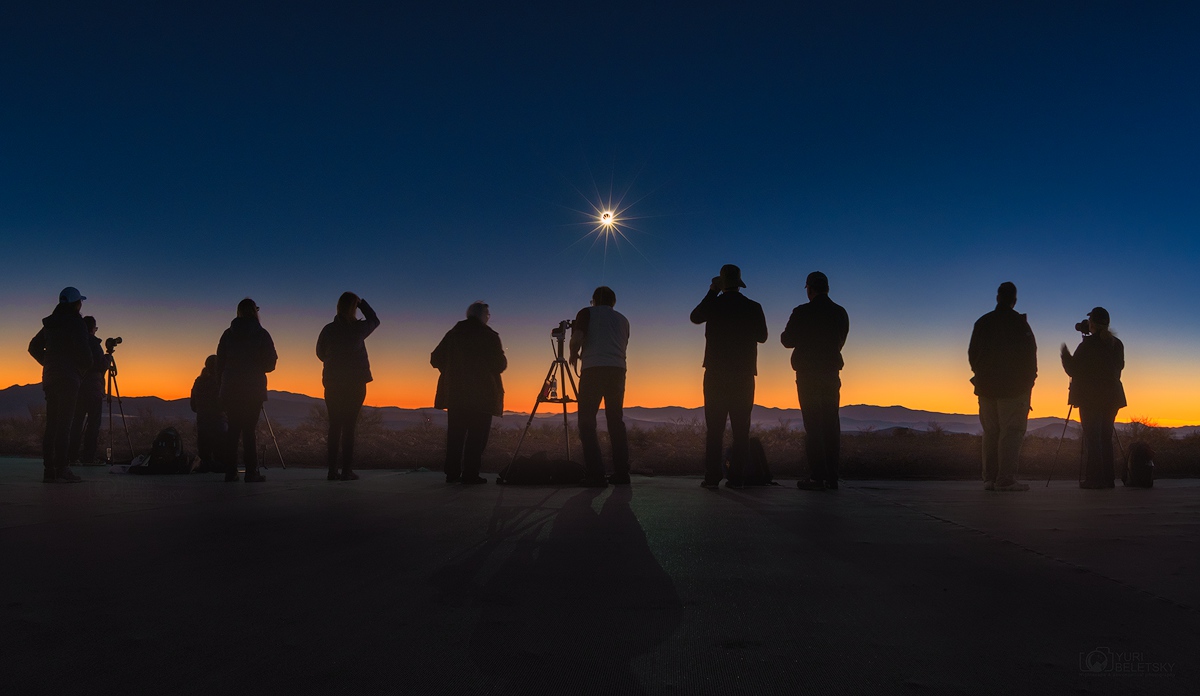
On July 2 denizens of planet Earth could stand in the Moon's dark umbral shadow during South America's 2019 total solar eclipse. It first touched down in the Southern Pacific Ocean, east of New Zealand. Racing toward the east along a narrow track, the shadow of the Moon made landfall along the Chilean coast with the Sun low on the western horizon. Captured in the foreground here are long shadows still cast by direct sunlight though, in the final moments before totality began. While diffraction spikes are from the camera lens aperture, the almost totally eclipsed Sun briefly shone like a beautiful diamond ring in the clear, darkened sky.