The Moon
The Moon is Earth’s only natural satellite—a rocky, cratered body about one‑quarter the diameter of Earth, orbiting at an average distance of approximately 384,400 km. It influences tides, stabilizes Earth’s axial tilt, and was formed about 4.5 billion years ago following a collision between Earth and a Mars-sized object.
Source: science.nasa.gov
APODs including "The Moon"
Chandrayaan 2 Launch
27/07/2019
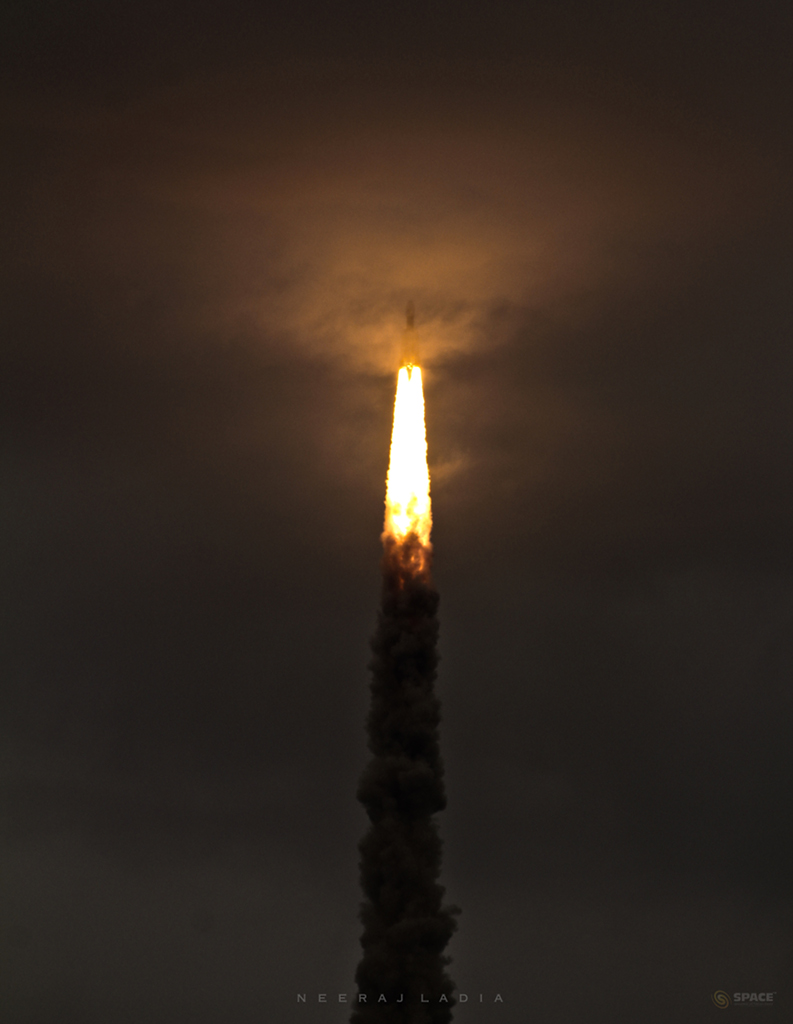
On July 22nd this GSLV (Geosynchronous Satellite Launch Vehicle) MkIII rocket vanished from sight into a cloud bank an instant after this dramatic snapshot was taken. Launched from India's Satish Dhawan Space Centre it carried the Chandrayaan 2 mission spacecraft into Earth orbit. The spacecraft's orbiter, lander, and rover are destined for the Moon, though. In the coming weeks it will perform a series of orbit raising maneuvers, eventually transferring to lunar orbit in early September. Carrying the solar-powered rover, the lander is scheduled to separate and attempt its autonomous soft landing at high latitudes near the lunar south pole. It should arrive on the lunar nearside near local sunrise and the start of about two Earth weeks of lunar daylight on September 7.