The Moon
The Moon is Earth’s only natural satellite—a rocky, cratered body about one‑quarter the diameter of Earth, orbiting at an average distance of approximately 384,400 km. It influences tides, stabilizes Earth’s axial tilt, and was formed about 4.5 billion years ago following a collision between Earth and a Mars-sized object.
Source: science.nasa.gov
APODs including "The Moon"
Saturn the Giant
09/11/2019
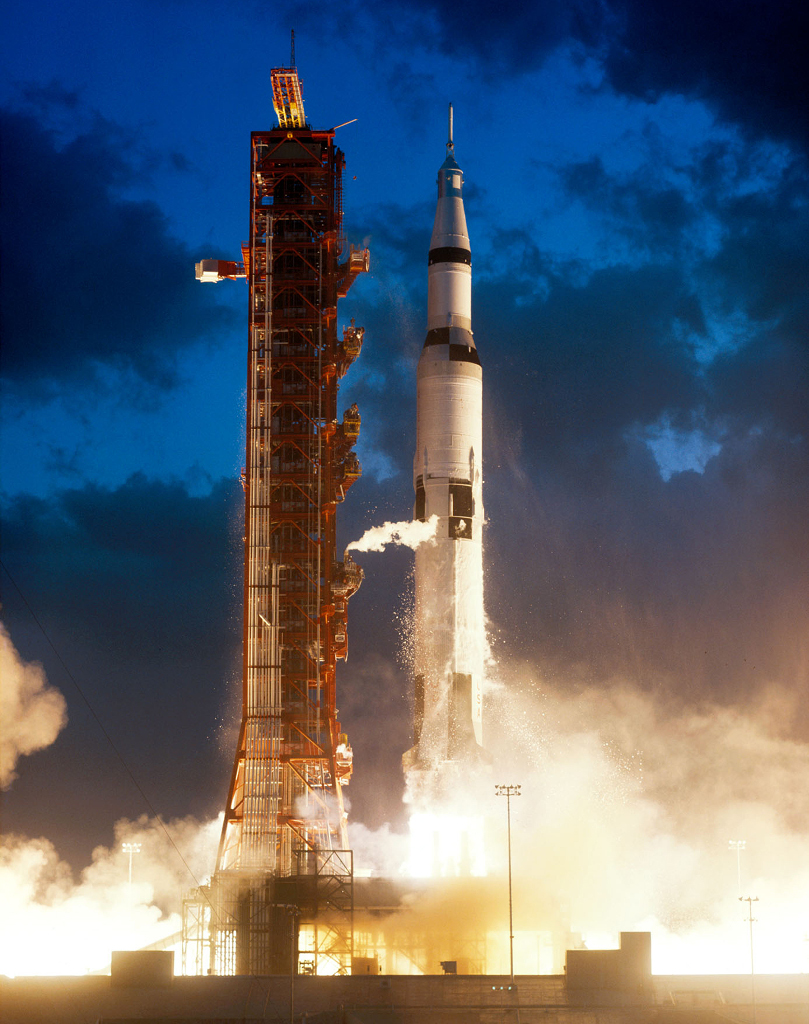
On May 25, 1961 U.S. president John Kennedy announced the goal of landing astronauts on the Moon by the end of the decade. By November 9, 1967 this Saturn V rocket was ready for launch and the first full test of its capabilities on the Apollo 4 mission. Its development directed by rocket pioneer Wernher Von Braun, the three stage Saturn V stood over 36 stories tall. It had a cluster of five first stage engines fueled by liquid oxygen and kerosene which together were capable of producing 7.9 million pounds of thrust. Giant Saturn V rockets ultimately hurled nine Apollo missions to the Moon and back again with six landing on the lunar surface. The first landing mission, Apollo 11, achieved Kennedy's goal on July 20, 1969. Watch: the November 11 Transit of Mercury from Earth or from Space.