The Moon
The Moon is Earth’s only natural satellite—a rocky, cratered body about one‑quarter the diameter of Earth, orbiting at an average distance of approximately 384,400 km. It influences tides, stabilizes Earth’s axial tilt, and was formed about 4.5 billion years ago following a collision between Earth and a Mars-sized object.
Source: science.nasa.gov
APODs including "The Moon"
Apollo 12: Self-Portrait
24/11/2019
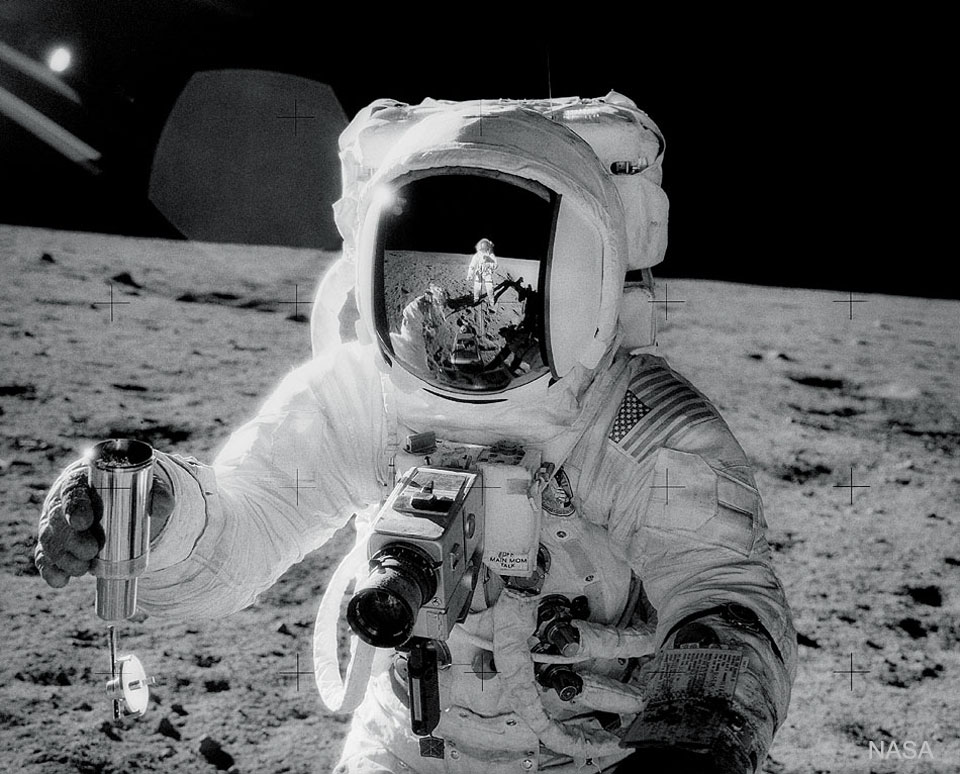
Is this image art? 50 years ago, Apollo 12 astronaut-photographer Charles "Pete" Conrad recorded this masterpiece while documenting colleague Alan Bean's lunar soil collection activities on Oceanus Procellarum. The featured image is dramatic and stark. The harsh environment of the Moon's Ocean of Storms is echoed in Bean's helmet, a perfectly composed reflection of Conrad and the lunar horizon. Works of photojournalists originally intent on recording the human condition on planet Earth, such as Lewis W. Hine's images from New York City in the early 20th century, or Margaret Bourke-White's magazine photography are widely regarded as art. Similarly many documentary astronomy and space images might also be appreciated for their artistic and esthetic appeal.