The Moon
The Moon is Earth’s only natural satellite—a rocky, cratered body about one‑quarter the diameter of Earth, orbiting at an average distance of approximately 384,400 km. It influences tides, stabilizes Earth’s axial tilt, and was formed about 4.5 billion years ago following a collision between Earth and a Mars-sized object.
Source: science.nasa.gov
APODs including "The Moon"
Moon and Planets at Twilight
28/11/2019
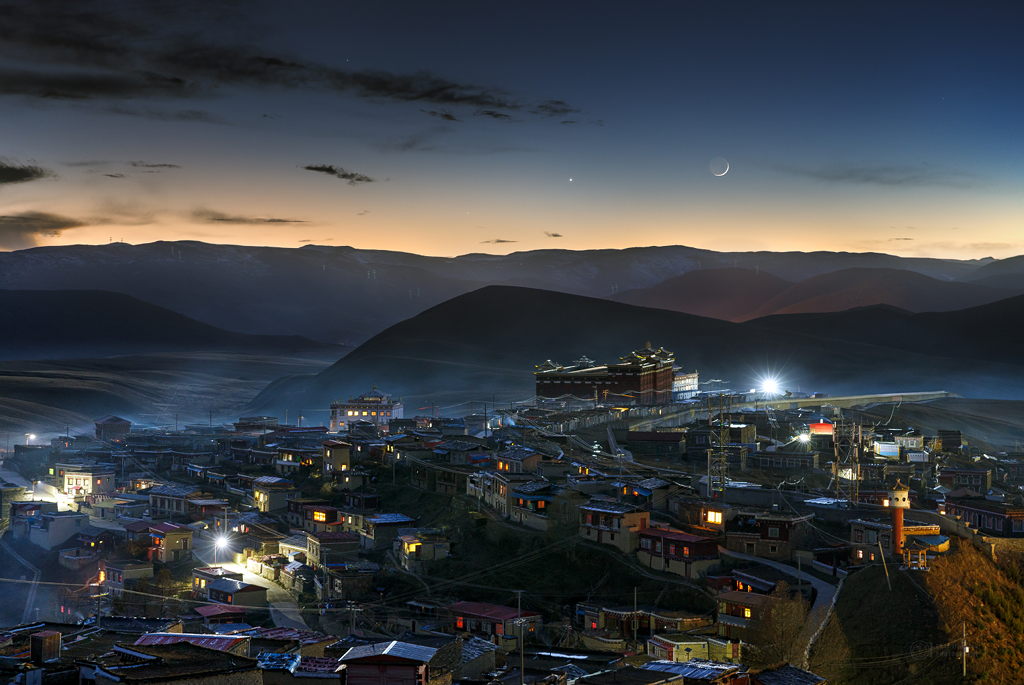
This week's ongoing conjunction of Venus and Jupiter may have whetted your appetite for skygazing. Tonight is the main course though. On November 28, a young crescent Moon will join them posing next to the two bright planets above the western horizon at twilight. Much like tonight's visual feast, this night skyscape shows a young lunar crescent and brilliant Venus in the western evening twilight on October 29. The celestial beacons are setting over distant mountains and the Minya monastery, Ganzi Tibetan Autonomous Prefecture, Sichuan, China, planet Earth. Then Mercury, not Jupiter, was a celestial companion to Venus and the Moon. The fleeting innermost planet is just visible here in the bright twilight, below and left of Venus and near the center of the frame. Tomorrow, November 29, the crescent Moon will also help you spot planet Saturn for dessert.