The Moon
The Moon is Earth’s only natural satellite—a rocky, cratered body about one‑quarter the diameter of Earth, orbiting at an average distance of approximately 384,400 km. It influences tides, stabilizes Earth’s axial tilt, and was formed about 4.5 billion years ago following a collision between Earth and a Mars-sized object.
Source: science.nasa.gov
APODs including "The Moon"
Apollo 14 Heads for Home
05/02/2021
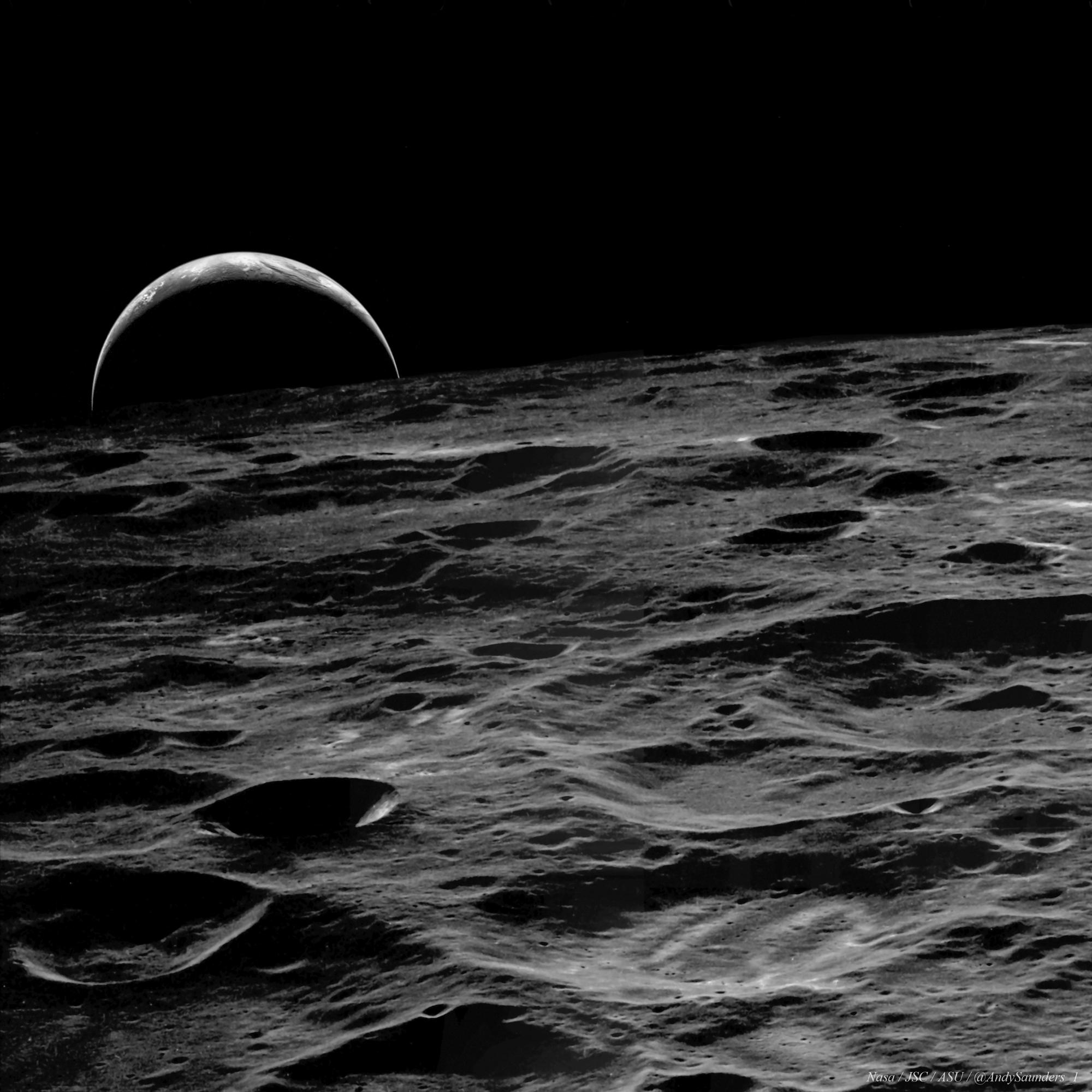
Fifty years ago this Sunday (February 7, 1971), the crew of Apollo 14 left lunar orbit and headed for home. They watched this Earthrise from their command module Kitty Hawk. With Earth's sunlit crescent just peeking over the lunar horizon, the cratered terrain in the foreground is along the lunar farside. Of course, while orbiting the Moon, the crew could watch Earth rise and set, but from the lunar surface the Earth hung stationary in the sky over their landing site at Fra Mauro Base. Rock samples returned from Fra Mauro included a 20 pound rock nicknamed Big Bertha, determined to contain a likely fragment of a meteorite from planet Earth. Kept on board the Kitty Hawk during the Apollo 14 mission was a cannister of 400-500 seeds that were later grown into Moon Trees.