The Moon
The Moon is Earth’s only natural satellite—a rocky, cratered body about one‑quarter the diameter of Earth, orbiting at an average distance of approximately 384,400 km. It influences tides, stabilizes Earth’s axial tilt, and was formed about 4.5 billion years ago following a collision between Earth and a Mars-sized object.
Source: science.nasa.gov
APODs including "The Moon"
Pink and the Perigee Moon
30/04/2021
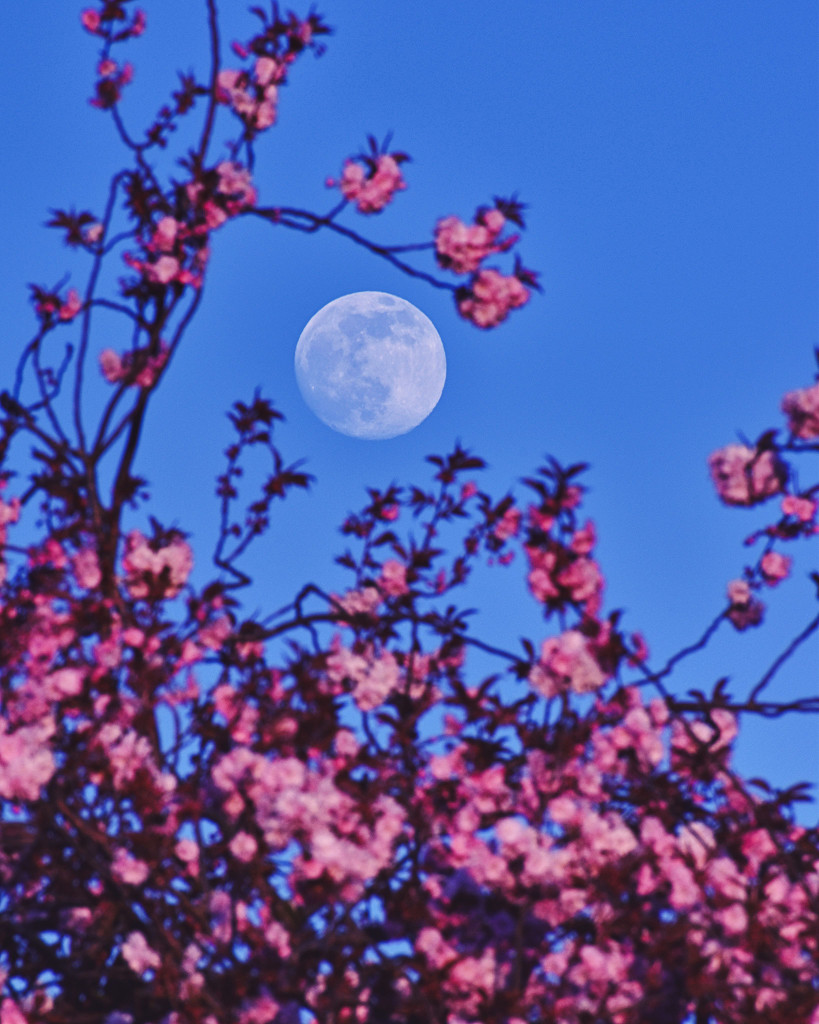
On April 25 a nearly full moon rose just before sunset. Welcomed in a clear blue sky and framed by cherry blossoms, its familiar face was captured in this snapshot from Leith, Edinburgh, Scotland. Known to some as a Pink Moon, April's full lunar phase occurred with the moon near perigee. That's the closest point in its not-quite-circular orbit around planet Earth, making this Pink Moon one of the closest and brightest full moons of the year. If you missed it, don't worry. Your next chance to see a full perigee moon will be on May 26. Known to some as a Flower Moon, May's full moon will actually be closer to you than April's by about 98 miles (158 kilometers), or about 0.04% the distance from the Earth to the Moon at perigee.