The Moon
The Moon is Earth’s only natural satellite—a rocky, cratered body about one‑quarter the diameter of Earth, orbiting at an average distance of approximately 384,400 km. It influences tides, stabilizes Earth’s axial tilt, and was formed about 4.5 billion years ago following a collision between Earth and a Mars-sized object.
Source: science.nasa.gov
APODs including "The Moon"
Lunar Occultation of Venus
02/06/2022
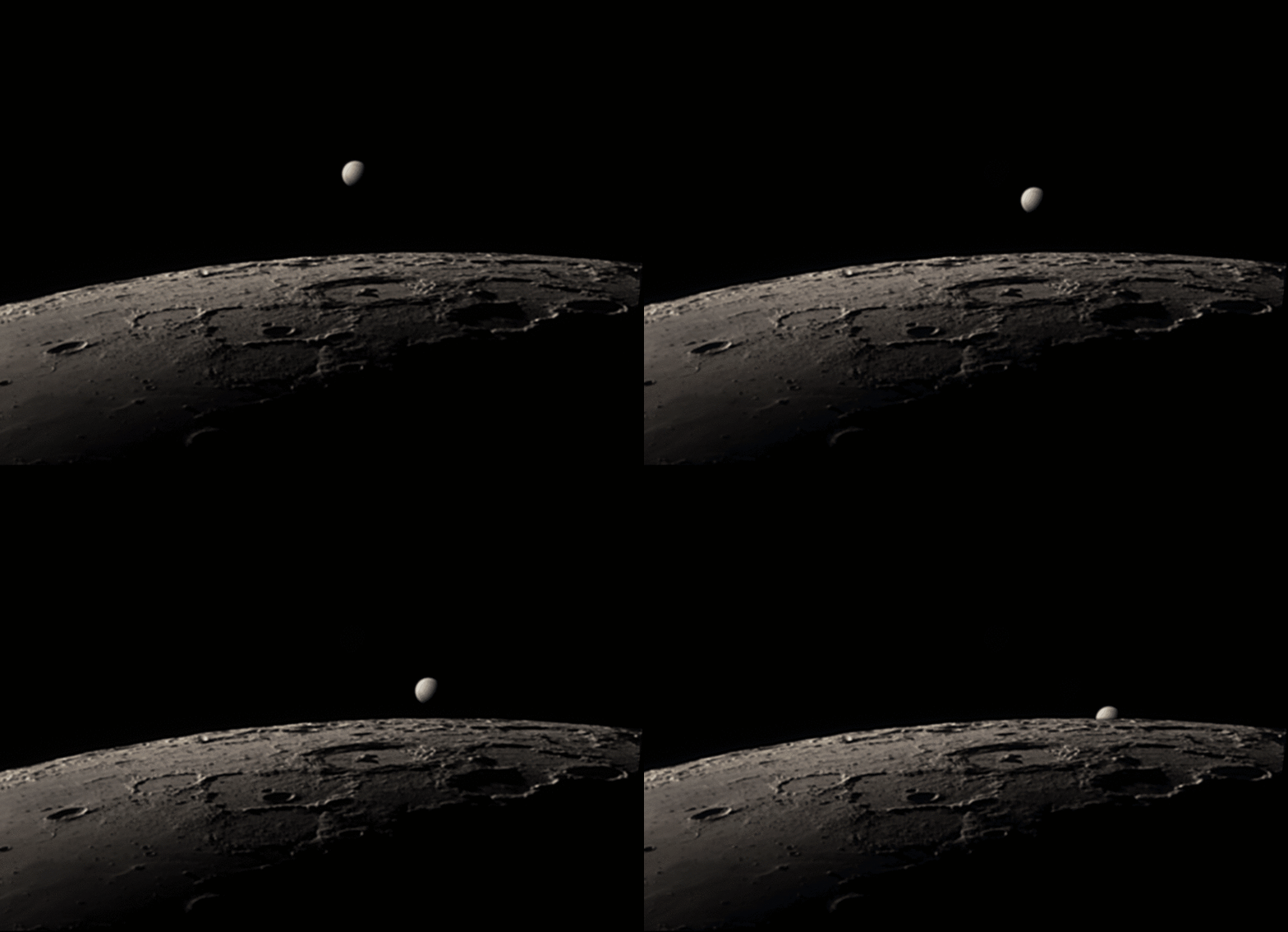
On May 27 Venus rose as the morning star, near the waning crescent Moon in a predawn sky already full of planets. It was close on the sky to the Moon's crescent and a conjunction of the second and third brightest celestial beacons was enjoyed by skygazers around the world. But seen from locations along a track through southeast Asia and the Indian Ocean the Moon actually passed in front of Venus in a lunar occultation. In this animated gif the 75 percent illuminated disk of Venus approaches and just begins to disappear behind the sunlit southwestern lunar limb. The telescopic frames used to construct it were captured from Reunion Island in the Indian Ocean around 4:50am local time, with the Moon and Venus very close to the eastern horizon. At the time Venus was over 180 million kilometers from Reunion Island, compared to a lunar distance of a mere 400 thousand kilometers or so. About 50 minutes later Venus emerged from behind the Moon.