The Moon
The Moon is Earth’s only natural satellite—a rocky, cratered body about one‑quarter the diameter of Earth, orbiting at an average distance of approximately 384,400 km. It influences tides, stabilizes Earth’s axial tilt, and was formed about 4.5 billion years ago following a collision between Earth and a Mars-sized object.
Source: science.nasa.gov
APODs including "The Moon"
Jupiter by Moonlight
03/11/2023
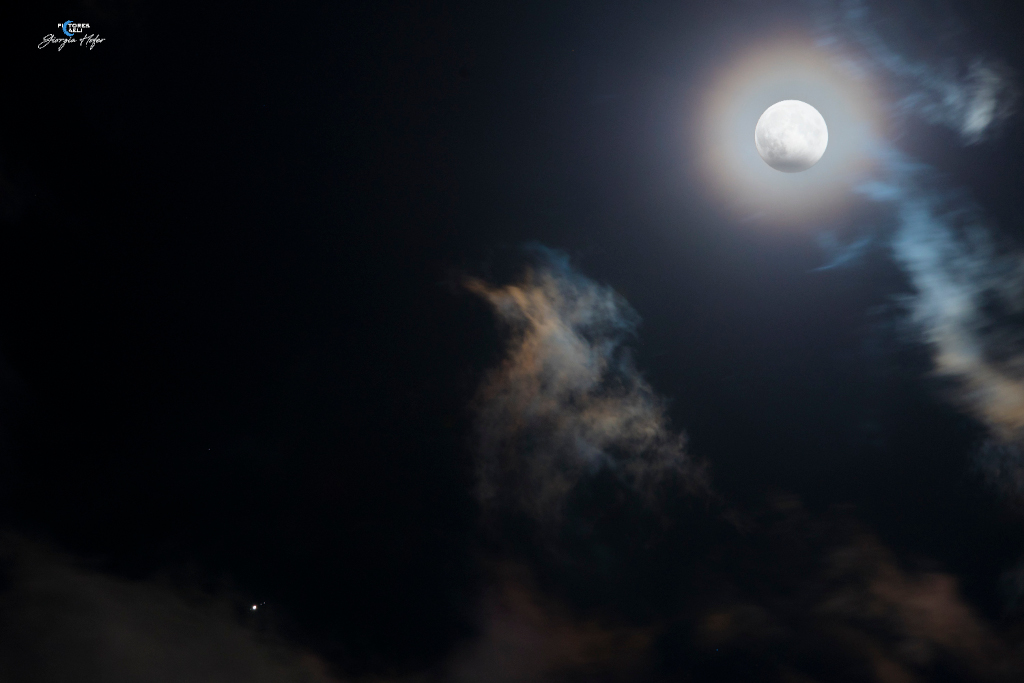
That bright beacon you've seen rising in the east just after sunset is Jupiter. Climbing high in midnight skies, our Solar System's ruling gas giant was at its 2023 opposition, opposite the Sun in planet Earth's sky, on November 2. But only a few days earlier, on October 28, the Moon was at its own opposition. Then both Full Moon and Jupiter could share this telephoto field of view. The celestial scene is composed from two exposures, one long and one short, blended to record bright planet and even brighter Moon during that evening's partial lunar eclipse. Moonlight shining through the thin, high clouds over northern Italy creates the colorful iridescence and lunar corona. Look closely and you'll also spot some of Jupiter's Galilean moons.