The Moon
The Moon is Earth’s only natural satellite—a rocky, cratered body about one‑quarter the diameter of Earth, orbiting at an average distance of approximately 384,400 km. It influences tides, stabilizes Earth’s axial tilt, and was formed about 4.5 billion years ago following a collision between Earth and a Mars-sized object.
Source: science.nasa.gov
APODs including "The Moon"
Odysseus on the Moon
02/03/2024
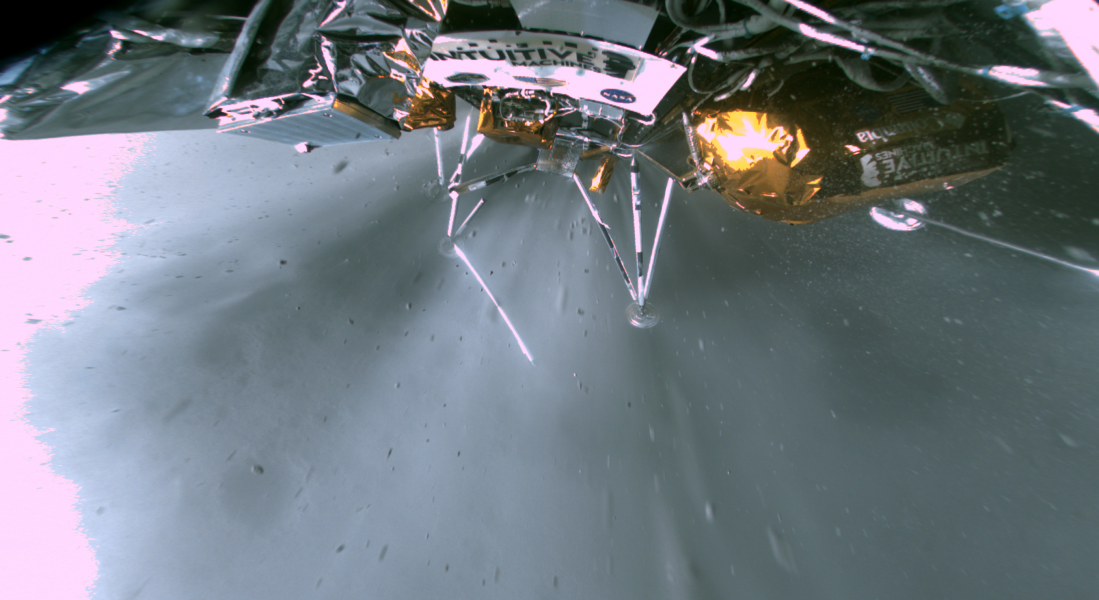
Methalox rocket engine firing, Odysseus' landing legs absorb first contact with the lunar surface in this wide-angle snapshot from a camera on board the robotic Intuitive Machines Nova-C moon lander. Following the landing on February 22, broken landing legs, visible in the image, ultimately left the lander at rest but tilted. Odysseus' gentle lean into a sloping lunar surface preserved the phone booth-sized lander's ability to operate, collect solar power, and return images and data to Earth. Its exact landing site in the Moon's far south polar region was imaged by NASA's Lunar Reconnaissance Orbiter. Donated by NASA, the American flag seen on the lander's central panel is 1970 Apollo program flight hardware.