The Moon
The Moon is Earth’s only natural satellite—a rocky, cratered body about one‑quarter the diameter of Earth, orbiting at an average distance of approximately 384,400 km. It influences tides, stabilizes Earth’s axial tilt, and was formed about 4.5 billion years ago following a collision between Earth and a Mars-sized object.
Source: science.nasa.gov
APODs including "The Moon"
Total Totality
12/04/2024
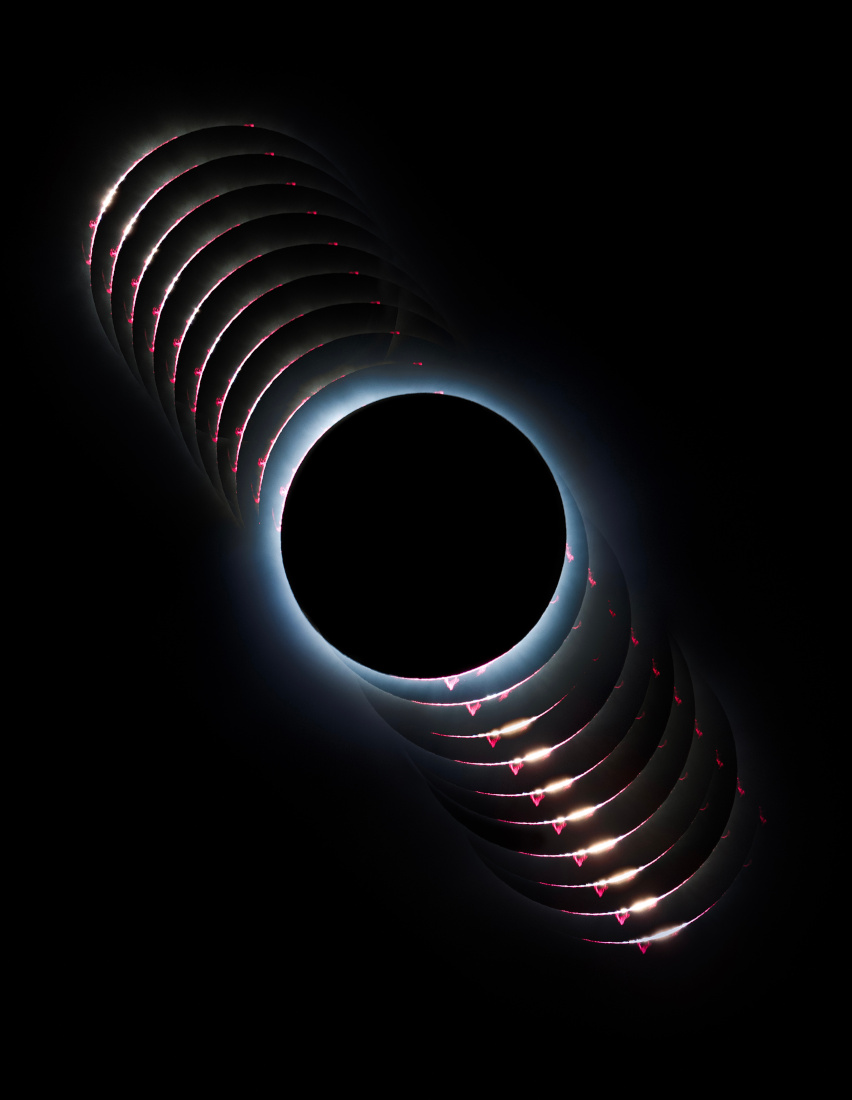
Baily's beads often appear at the boundaries of the total phase of an eclipse of the Sun. Pearls of sunlight still beaming through gaps in the rugged terrain along the lunar limb silhouette, their appearance is recorded in this dramatic timelapse composite. The series of images follows the Moon's edge from beginning through the end of totality during April 8's solar eclipse from Durango, Mexico. They also capture pinkish prominences of plasma arcing high above the edge of the active Sun. One of the first places in North America visited by the Moon's shadow on April 8, totality in Durango lasted about 3 minutes and 46 seconds. Solar Eclipse Imagery: Notable Submissions to APOD