The Moon
The Moon is Earth’s only natural satellite—a rocky, cratered body about one‑quarter the diameter of Earth, orbiting at an average distance of approximately 384,400 km. It influences tides, stabilizes Earth’s axial tilt, and was formed about 4.5 billion years ago following a collision between Earth and a Mars-sized object.
Source: science.nasa.gov
APODs including "The Moon"
Diamonds in the Sky
20/04/2024
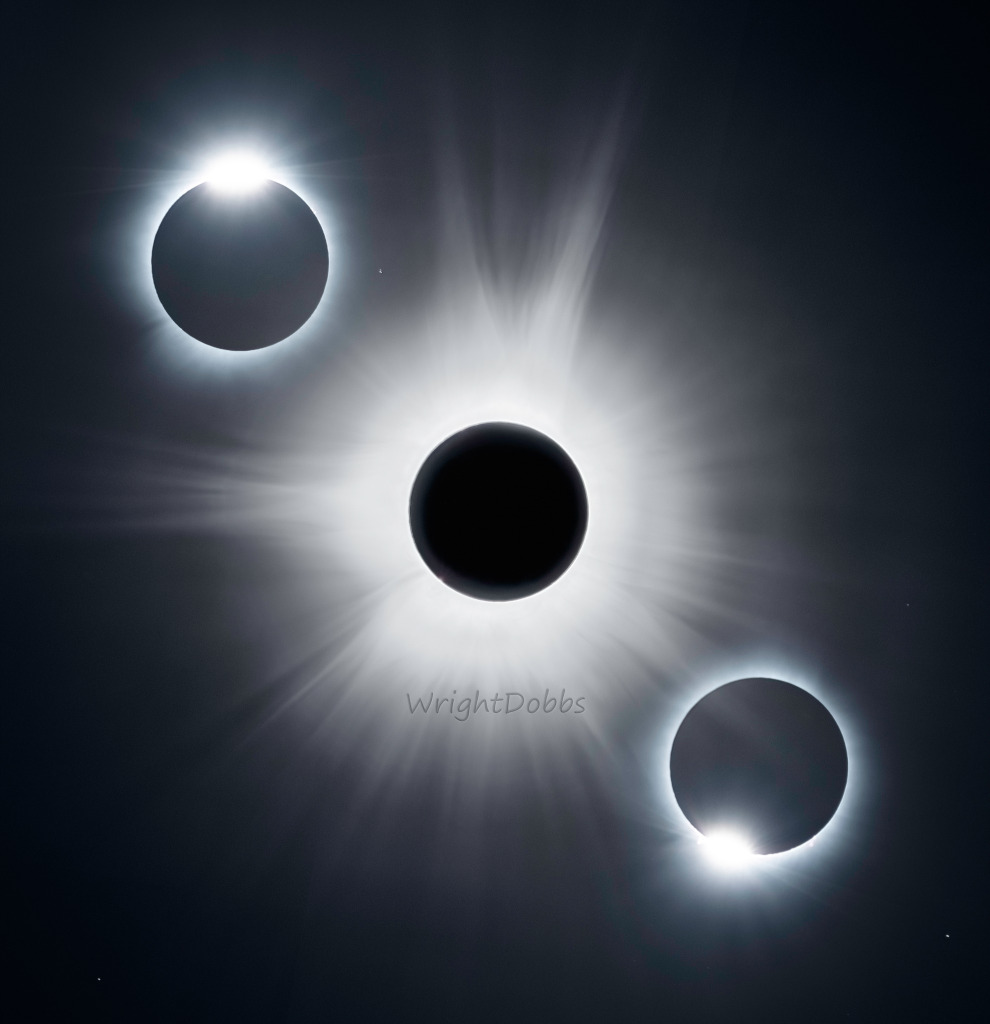
When the dark shadow of the Moon raced across North America on April 8, sky watchers along the shadow's narrow central path were treated to a total solar eclipse. During the New Moon's shadow play diamonds glistened twice in the eclipse-darkened skies. The transient celestial jewels appeared immediately before and after the total eclipse phase. That's when the rays of a vanishing and then emerging sliver of solar disk are just visible behind the silhouetted Moon's edge, creating the appearance of a shiny diamond set in a dark ring. This dramatic timelapse composite from north-central Arkansas captures both diamond ring moments of this total solar eclipse. The diamond rings are separated by the ethereal beauty of the solar corona visible during totality.