The Moon
The Moon is Earth’s only natural satellite—a rocky, cratered body about one‑quarter the diameter of Earth, orbiting at an average distance of approximately 384,400 km. It influences tides, stabilizes Earth’s axial tilt, and was formed about 4.5 billion years ago following a collision between Earth and a Mars-sized object.
Source: science.nasa.gov
APODs including "The Moon"
Aurora Georgia
16/05/2024
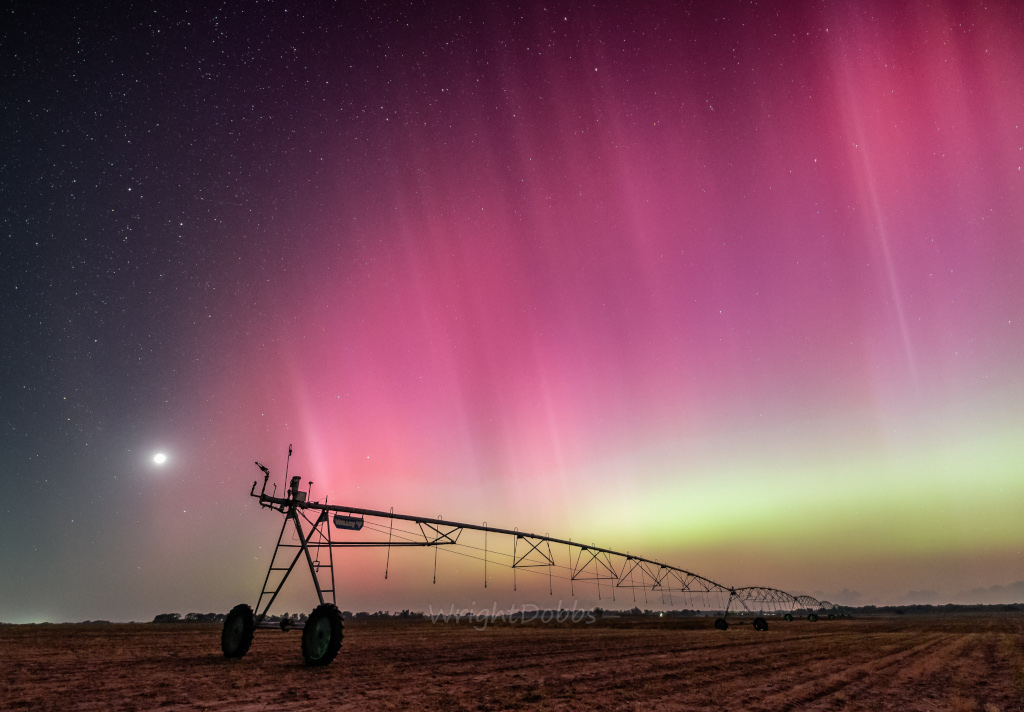
A familiar sight from Georgia, USA, the Moon sets near the western horizon in this rural night skyscape. Captured on May 10 before local midnight, the image overexposes the Moon's bright waxing crescent at left in the frame. A long irrigation rig stretches across farmland about 15 miles north of the city of Bainbridge. Shimmering curtains of aurora shine across the starry sky, definitely an unfamiliar sight for southern Georgia nights. Last weekend, extreme geomagnetic storms triggered by the recent intense activity from solar active region AR 3664 brought epic displays of aurora, usually seen closer to the poles, to southern Georgia and even lower latitudes on planet Earth. As solar activity ramps up, more storms are possible. AuroraSaurus: Report your aurora observations