The Moon
The Moon is Earth’s only natural satellite—a rocky, cratered body about one‑quarter the diameter of Earth, orbiting at an average distance of approximately 384,400 km. It influences tides, stabilizes Earth’s axial tilt, and was formed about 4.5 billion years ago following a collision between Earth and a Mars-sized object.
Source: science.nasa.gov
APODs including "The Moon"
Southern Moonscape
30/08/2024
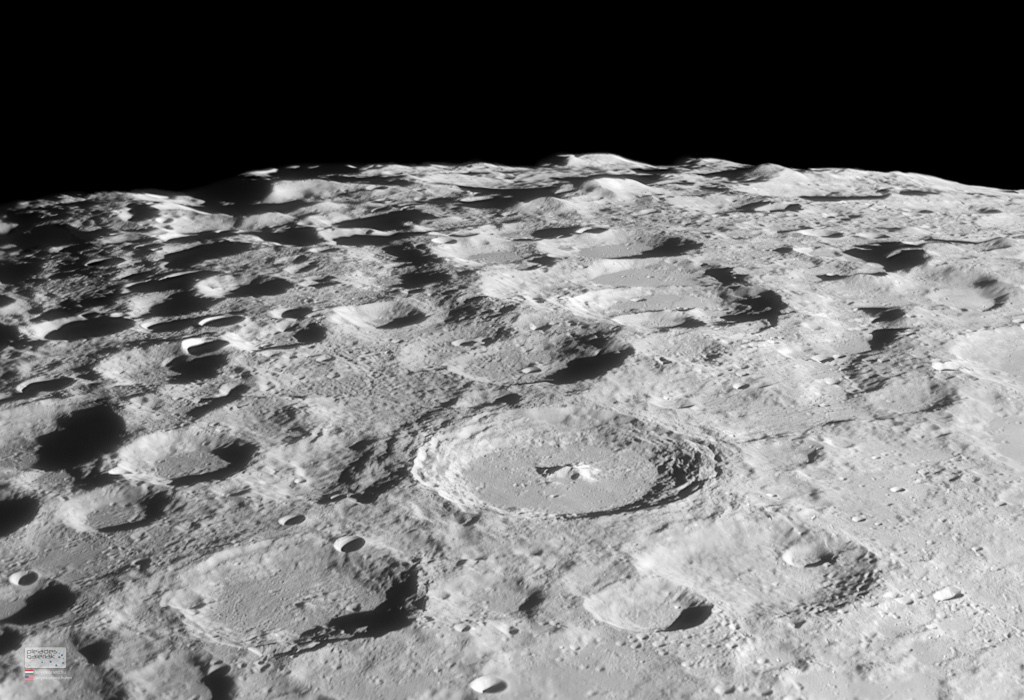
The Moon's south pole is toward the top left of this detailed telescopic moonscape. Captured on August 23, it looks across the rugged southern lunar highlands. The view's foreshortened perspective heightens the impression of a dense field of craters and makes the craters themselves appear more oval shaped close to the lunar limb. Prominent near center is 114 kilometer diameter crater Moretus. Moretus is young for a large lunar crater and features terraced inner walls and a 2.1 kilometer high, central peak, similar in appearance to the more northerly young crater Tycho. Mountains visible along the lunar limb at the top can rise about 6 kilometers or so above the surrounding terrain. Close to the lunar south pole, permanently shadowed crater floors with expected reservoirs of water-ice have made the rugged south polar region of the Moon a popular target for exploration.