The Sun
The Sun is a yellow dwarf star (G2V), about 4.6 billion years old, and the dominant gravitational force in the Solar System. It has a diameter of roughly 1.4 million kilometers and contains around 99.8% of the Solar System’s mass. Nuclear fusion in its core converts hydrogen into helium, producing energy that warms the planets. Above the core lie the radiative and convective zones, followed by the visible photosphere (~5,500 °C), the chromosphere, and the much hotter corona (~2 million °C).
Source: science.nasa.gov
APODs including "The Sun"
Close To Eros
27/10/2000
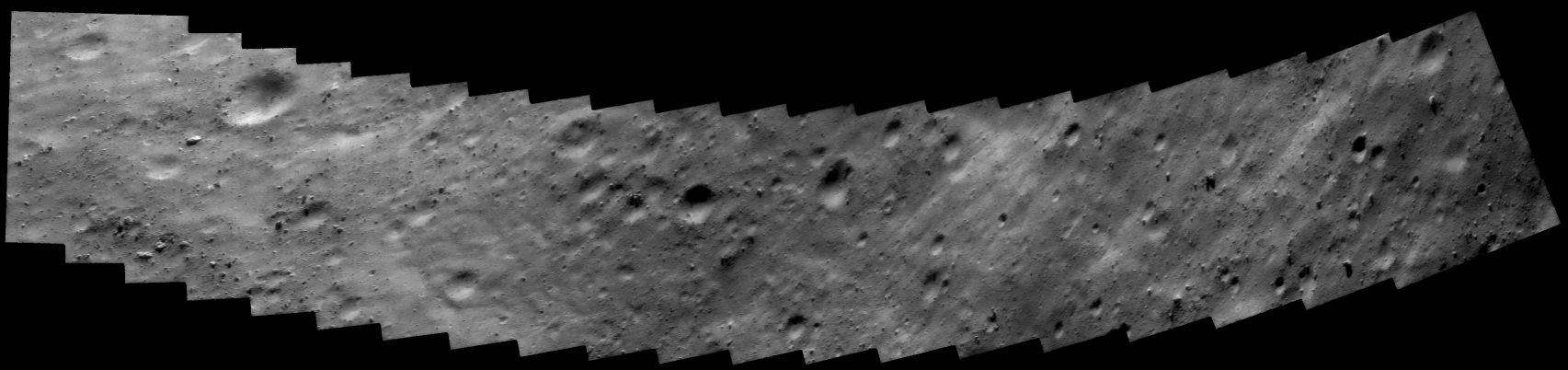
Scroll right and fly close over asteroid Eros! This long mosaic was constructed of images returned yesterday by the NEAR Shoemaker spacecraft as it orbited to within 6.4 kilometers of a spot in the southern hemisphere of the rotating asteroid's surface. That distance (about 21,000 feet) is less than the cruising altitude of most commercial airline flights. The digital images show that while many regions appear smooth with craters filled in by an accumulation of loose regolith, much of Eros' surface is littered with rocks and boulders. The large boulder glinting in the sunlight at the far left, just above the center of the mosaic, spans approximately 25 meters. In the high-resolution view, the smallest rocks visible are roughly human-sized at about 1.4 meters (5 feet) across. The car-sized Near Shoemaker spacecraft is now on its way to a higher, more stable orbit about 200 kilometers above asteroid Eros.