The Sun
The Sun is a yellow dwarf star (G2V), about 4.6 billion years old, and the dominant gravitational force in the Solar System. It has a diameter of roughly 1.4 million kilometers and contains around 99.8% of the Solar System’s mass. Nuclear fusion in its core converts hydrogen into helium, producing energy that warms the planets. Above the core lie the radiative and convective zones, followed by the visible photosphere (~5,500 °C), the chromosphere, and the much hotter corona (~2 million °C).
Source: science.nasa.gov
APODs including "The Sun"
Auroras Over Both Earth Poles
14/11/2001
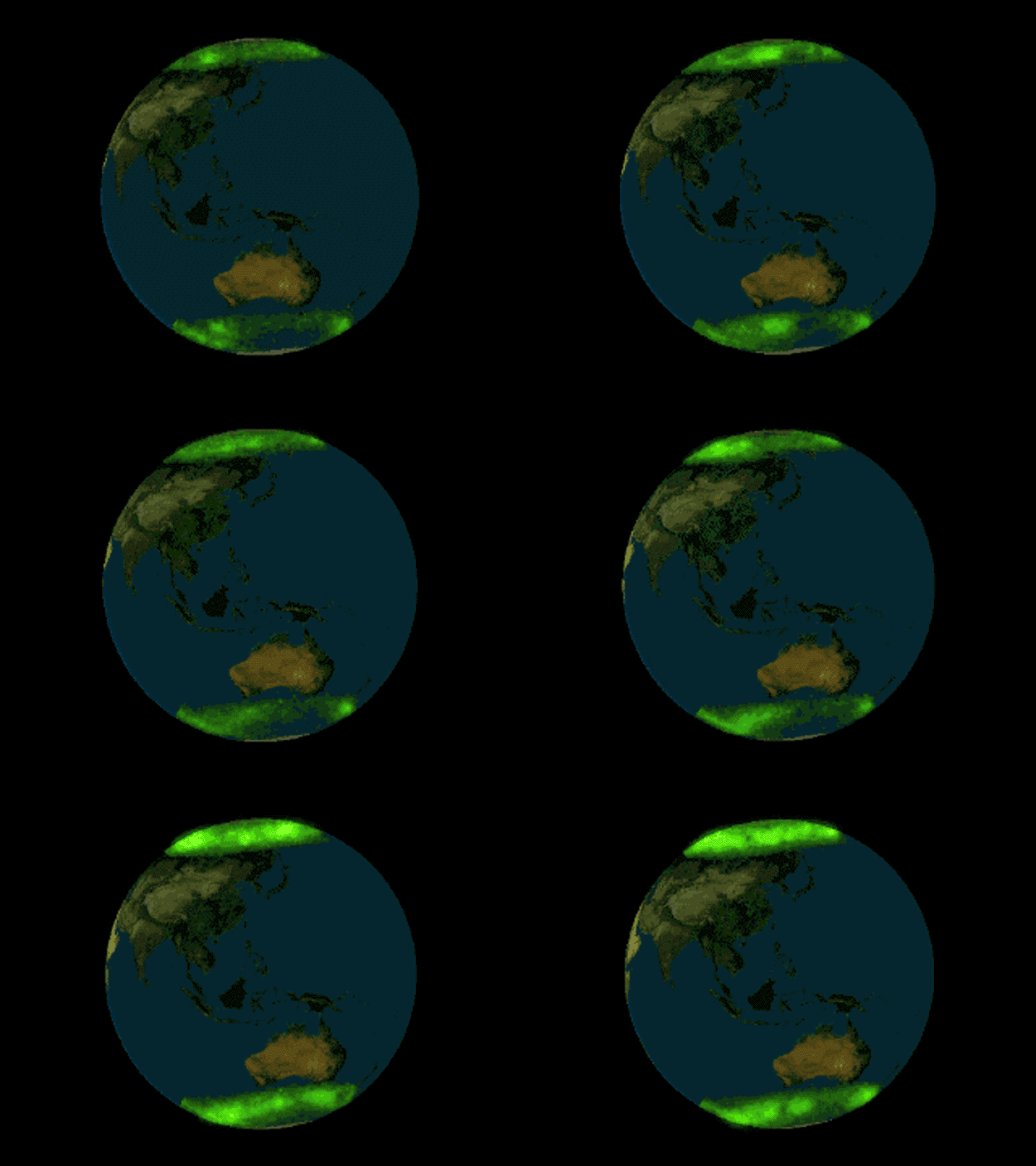
Auroras in the north and south can be nearly mirror images of each other. Such mirroring had been suspected for centuries but dramatically confirmed only last month by detailed images from NASA's orbiting Polar spacecraft. Pictured above, a time-lapse movie shows simultaneous changes in aurora borealis, at the top, and aurora australis, at the bottom. A cloud of electrons and ions moving out from the Sun on October 22 created the auroras. The solar explosion that released the particles occurred about three days earlier.