The Sun
The Sun is a yellow dwarf star (G2V), about 4.6 billion years old, and the dominant gravitational force in the Solar System. It has a diameter of roughly 1.4 million kilometers and contains around 99.8% of the Solar System’s mass. Nuclear fusion in its core converts hydrogen into helium, producing energy that warms the planets. Above the core lie the radiative and convective zones, followed by the visible photosphere (~5,500 °C), the chromosphere, and the much hotter corona (~2 million °C).
Source: science.nasa.gov
APODs including "The Sun"
Lunar View, Solar Eclipse
31/08/2017
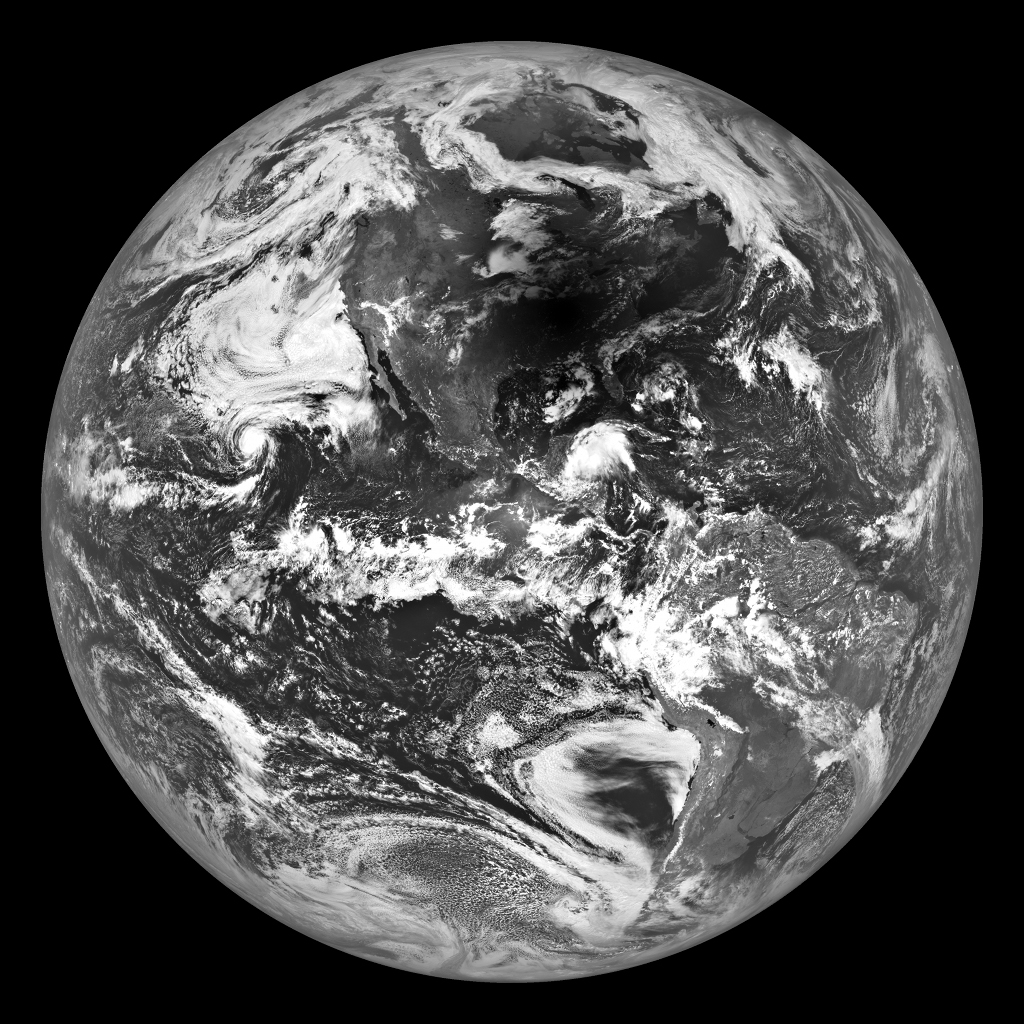
Swinging around the lunar nearside on August 21, the Lunar Reconnaissance Orbiter turned to look back on a bright, Full Earth. As anticipated its Narrow Angle Camera scanned this sharp view of our fair planet, catching the shadow of the Moon racing along a path across the United States at about 1,500 miles per hour. In fact, the dark lunar shadow is centered over Hopkinsville, Kentucky at 1:25:30pm Central Daylight Time. From there, the New Moon blocked the Sun high in clear skies for about 2 minutes and 40 seconds in a total solar eclipse.