The Sun
The Sun is a yellow dwarf star (G2V), about 4.6 billion years old, and the dominant gravitational force in the Solar System. It has a diameter of roughly 1.4 million kilometers and contains around 99.8% of the Solar System’s mass. Nuclear fusion in its core converts hydrogen into helium, producing energy that warms the planets. Above the core lie the radiative and convective zones, followed by the visible photosphere (~5,500 °C), the chromosphere, and the much hotter corona (~2 million °C).
Source: science.nasa.gov
APODs including "The Sun"
Atlas at Dawn
09/08/2019
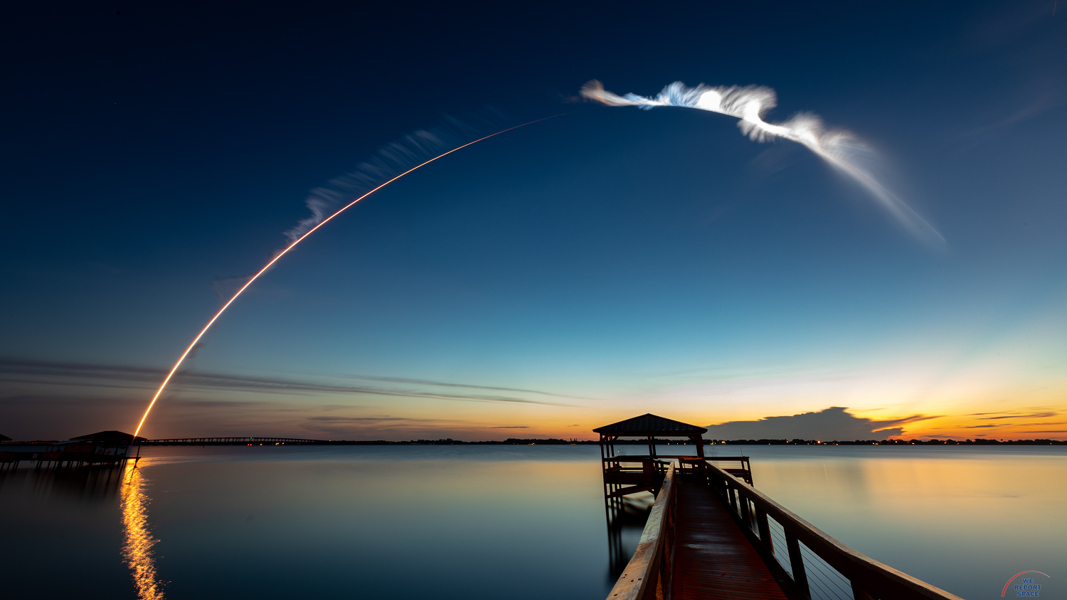
This single, 251-second long exposure follows the early flight of an Atlas V rocket on August 8, streaking eastward toward the dawn from Cape Canaveral Air Force Station, planet Earth. The launch of the United Launch Alliance rocket was at 6:13am local time. Sunrise was not until 6:48am, but the rocket's downrange plume at altitude is brightly lit by the Sun still just below the eastern horizon. Waters of the Indian River Lagoon in Palm Shores, Forida reflect subtle colors and warming glow of the otherwise calm, predawn sky. The mighty Atlas rocket carried a military communications satellite into Earth orbit. Of course, this weekend the streaks you see in clear skies before the dawn could be Perseid Meteors. Watch: Perseid Meteor Shower