The Sun
The Sun is a yellow dwarf star (G2V), about 4.6 billion years old, and the dominant gravitational force in the Solar System. It has a diameter of roughly 1.4 million kilometers and contains around 99.8% of the Solar System’s mass. Nuclear fusion in its core converts hydrogen into helium, producing energy that warms the planets. Above the core lie the radiative and convective zones, followed by the visible photosphere (~5,500 °C), the chromosphere, and the much hotter corona (~2 million °C).
Source: science.nasa.gov
APODs including "The Sun"
Lucy Launches to Eight Asteroids
20/10/2021
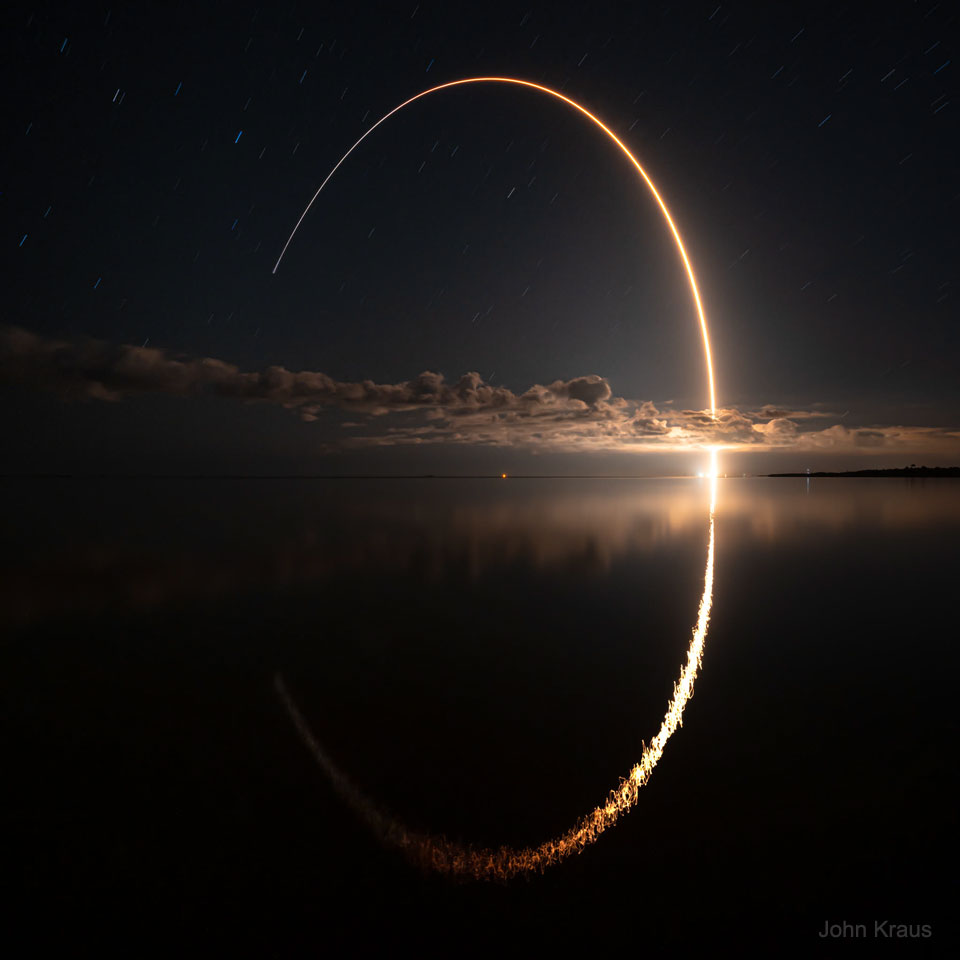
Why would this mission go out as far as Jupiter -- but then not visit Jupiter? Lucy's plan is to follow different leads about the origin of our Solar System than can be found at Jupiter -- where Juno now orbits. Jupiter is such a massive planet that its gravity captures numerous asteroids that orbit the Sun ahead of it -- and behind. These trojan asteroids formed all over our Solar System and some may have been trapped there for billions of years. Flying by these trojan asteroids enables studying them as fossils that likely hold unique clues about our early Solar System. Lucy, named after a famous fossil skeleton which was named after a famous song, is scheduled to visit eight asteroids from 2025 to 2033. Pictured, Lucy's launch was captured with reflection last week aboard a powerful Atlas V rocket from Cape Canaveral, Florida, USA.