The Sun
The Sun is a yellow dwarf star (G2V), about 4.6 billion years old, and the dominant gravitational force in the Solar System. It has a diameter of roughly 1.4 million kilometers and contains around 99.8% of the Solar System’s mass. Nuclear fusion in its core converts hydrogen into helium, producing energy that warms the planets. Above the core lie the radiative and convective zones, followed by the visible photosphere (~5,500 °C), the chromosphere, and the much hotter corona (~2 million °C).
Source: science.nasa.gov
APODs including "The Sun"
A Full Moon at Perigee
08/11/2025
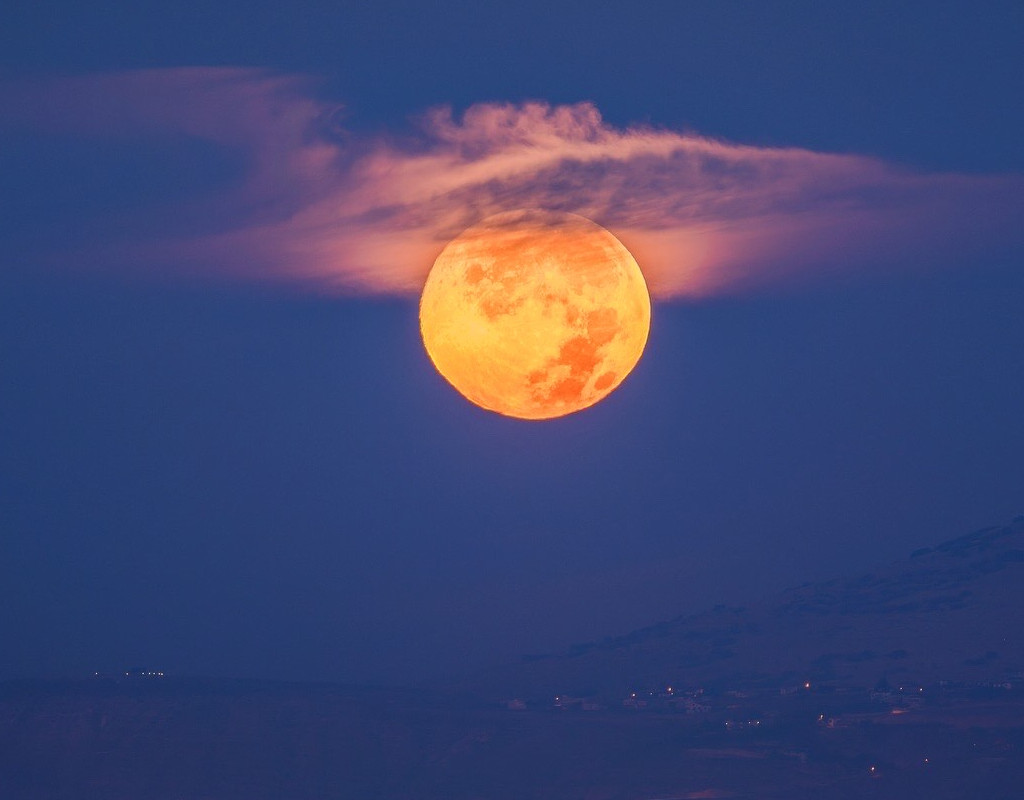
What is big, bright, and beautiful, can wear a cape made of clouds, and is at the closest point in its elliptical orbit around planet Earth? A full moon at perigee of course, captured here near moonset in predawn skies on November 5 from Kayseri, Turkiye. Full moons that happen at (or very near) perigee, and so are slightly larger and brighter than full moons on average, have become popularly known as supermoons. In fact, this full moon at perigee is the closest and brightest of the three supermoons of 2025. Rising as the Sun sets, this full moon follows this October's Harvest Moon and is traditionally known to some as the Hunter's Moon.