Titan
Saturn's largest moon and the second-largest in the Solar System. Titan is unique for its dense nitrogen-rich atmosphere and the presence of liquid hydrocarbon lakes and rivers on its surface.
Source: science.nasa.gov
APODs including "Titan"
Saturn's Rings Seen Sideways
18/10/1998
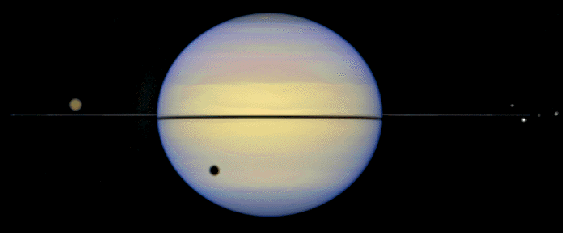
Saturn's rings are actually very thin. This picture from the Hubble Space Telescope was taken on August 6, 1995 when the rings lined up sideways as seen from Earth. Saturn's largest moon Titan is seen on the left, and Titan's shadow can be seen on Saturn's cloud tops! Titan itself looks a brownish color because of its thick atmosphere. Four other moons of Saturn can be seen just above the ring plane, which are, from left to right: Mimas, Tethys, Janus, and Enceladus. If you look carefully, you will note that the dark band across the planet is actually the shadow of the rings, and is slightly displaced from the real rings - which are best seen away from the planet. Saturn's rings are not solid - they are composed of ice chunks which range in size from a grain of sand to a house.