Titan
Saturn's largest moon and the second-largest in the Solar System. Titan is unique for its dense nitrogen-rich atmosphere and the presence of liquid hydrocarbon lakes and rivers on its surface.
Source: science.nasa.gov
APODs including "Titan"
Northern Summer on Titan
20/06/2020
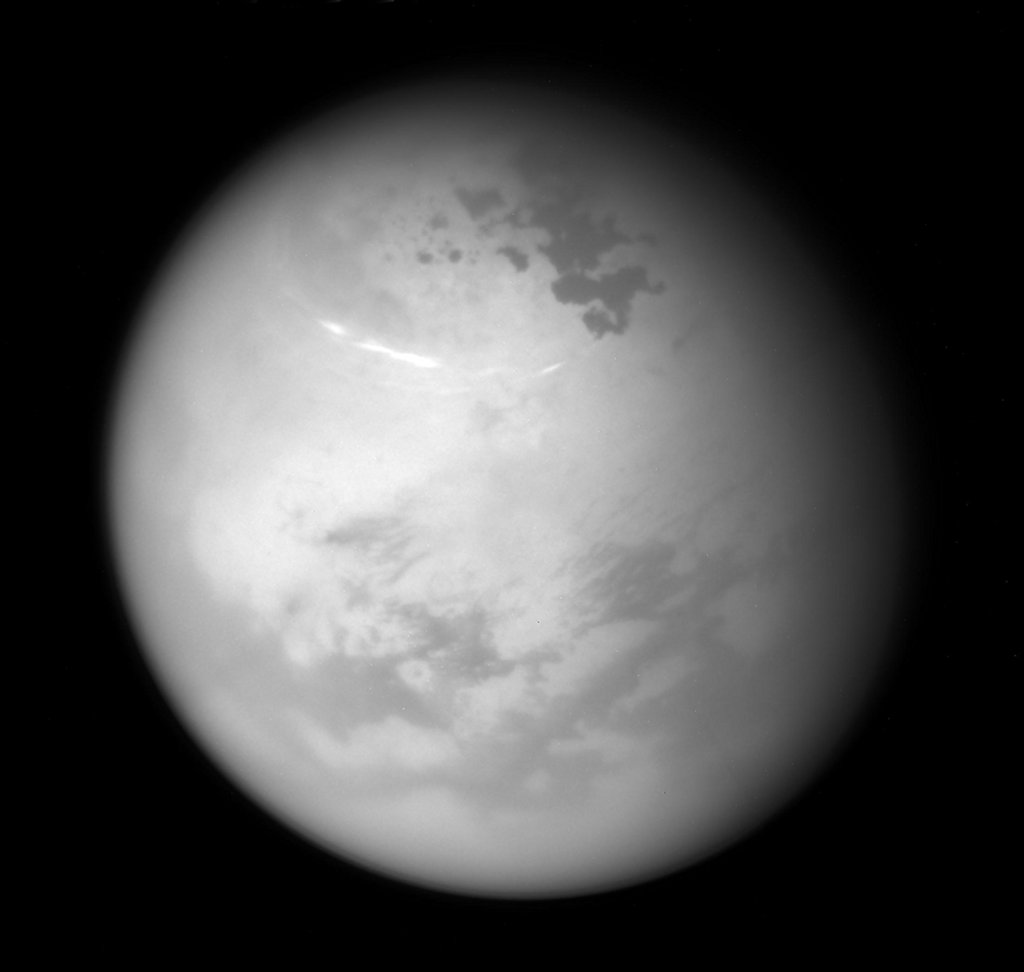
Today's solstice brings summer to planet Earth's northern hemisphere. But the northern summer solstice arrived for ringed planet Saturn over three years ago on May 24, 2017. Orbiting the gas giant, Saturn's moon Titan experiences the Saturnian seasons that are about 7 Earth-years long. Larger than inner planet Mercury, Titan was captured in this Cassini spacecraft image about two weeks after its northern summer began. The near-infrared view finds bright methane clouds drifting through Titan's dense, hazy atmosphere as seen from a distance of about 507,000 kilometers. Below the clouds, dark hydrocarbon lakes sprawl near its fully illuminated north pole.