Triton
Triton is the largest of Neptune's 13 moons and is unique due to its retrograde orbit, meaning it orbits Neptune in the opposite direction of the planet's rotation. Scientists believe Triton was a Kuiper Belt Object captured by Neptune's gravity millions of years ago.
Source: science.nasa.gov
APODs including "Triton"
Geysers on Triton
05/08/1995
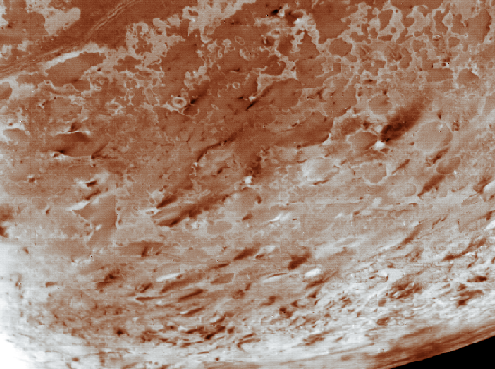
August 5, 1995 Geysers on Triton Credit: NASA, Voyager Project, Copyright Calvin J. Hamilton Explanation: In August of 1989 NASA's Voyager 2 spacecraft passed by Neptune, the most distant of the solar system's gas giant planets. Its encounter with Neptune climaxed with its closest approach to Neptune's largest moon Triton. From a distance of about 24,000 miles the robot space probe surveyed Triton's surface, whose temperature averages nearly -400 degrees Fahrenheit, and discovered surprising evidence of a complex and active world. For example, the prominent dark streaks in this image seem to come from small volcanoes and may consist of nitrogen frost mixed with organic compounds ejected during geyser-like eruptions. For more information about Triton, see Calvin J. Hamilton's Triton page .