Venus
The second planet from the Sun and one of the brightest objects in Earth’s night sky. Venus is often visible near sunrise or sunset and is commonly referred to as the 'morning star' or 'evening star.'
Source: solarsystem.nasa.gov
APODs including "Venus"
A Venusian Tick
23/08/1995
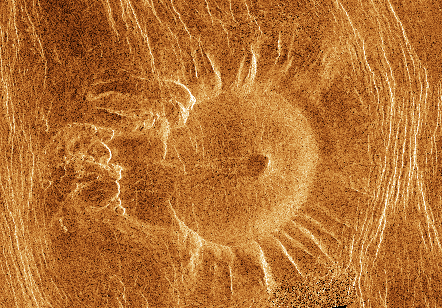
August 23, 1995 A Venusian Tick Credit: NASA, Magellan Project Explanation: Data from the Magellan spacecraft has shown the Face of Venus to contain a host of volcanic features. This image shows an example of a fairly common type of venusian volcanic feature. Known as a "tick" it represents a volcano about 20 miles wide at the summit with ridges and valleys radiating down its sides lending it an insect like appearance. Scientists are particularly interested in exploring the geology of Venus. Because of its similarity with the Earth in size, density, and overall location in the solar system, Venus may offer key insights into the workings of our own planet. Do the familiar processes of volcanism and plate tectonics occur on our sister planet as well as our own? The detailed radar mapping of the planet performed by the Magellan probe has gone a long way toward answering this question.