Venus
The second planet from the Sun and one of the brightest objects in Earth’s night sky. Venus is often visible near sunrise or sunset and is commonly referred to as the 'morning star' or 'evening star.'
Source: solarsystem.nasa.gov
APODs including "Venus"
Eclipsed Moon Over Wyoming
06/06/2012
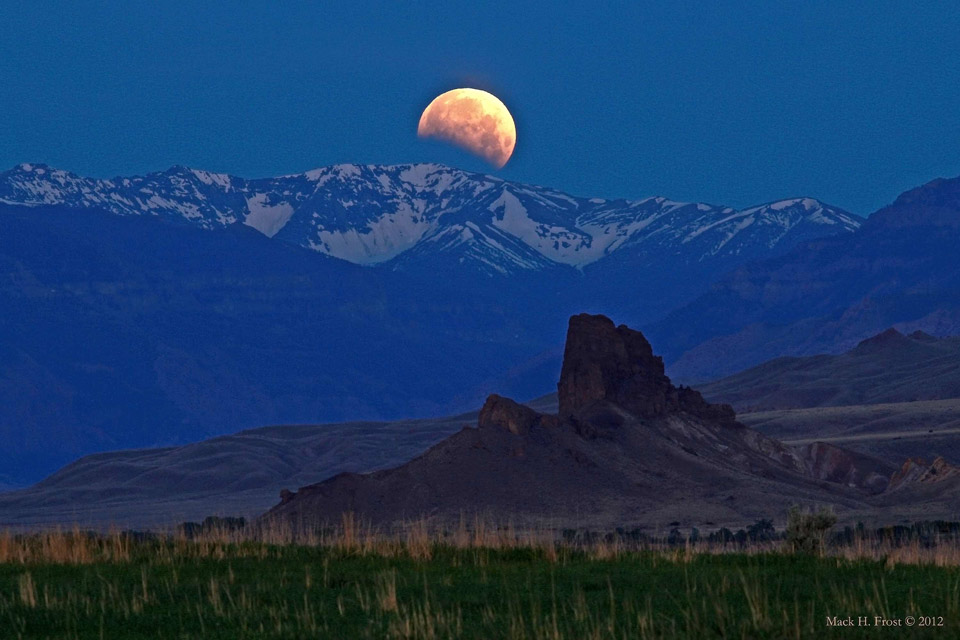
A setting full moon rarely looks like this. Monday morning just before a fully lit Strawberry Moon dropped behind the Absaroka Mountain Range near Cody, Wyoming, USA, the shadow of the Earth got in the way. A similarly setting partial lunar eclipse was visible throughout most of North and South America, while simultaneously the same partially darkened moon was visible throughout eastern Asia. Pictured in the foreground is a snowbank formation known as the Horse's Head off a tributary of the Shoshone River. Lunar eclipses occur about twice a year, and the next one -- a penumbral eclipse -- will occur in late November. Venus Transit Gallery: Browse or Contribute!