Venus
The second planet from the Sun and one of the brightest objects in Earth’s night sky. Venus is often visible near sunrise or sunset and is commonly referred to as the 'morning star' or 'evening star.'
Source: solarsystem.nasa.gov
APODs including "Venus"
Shadows of Earth
09/05/2023
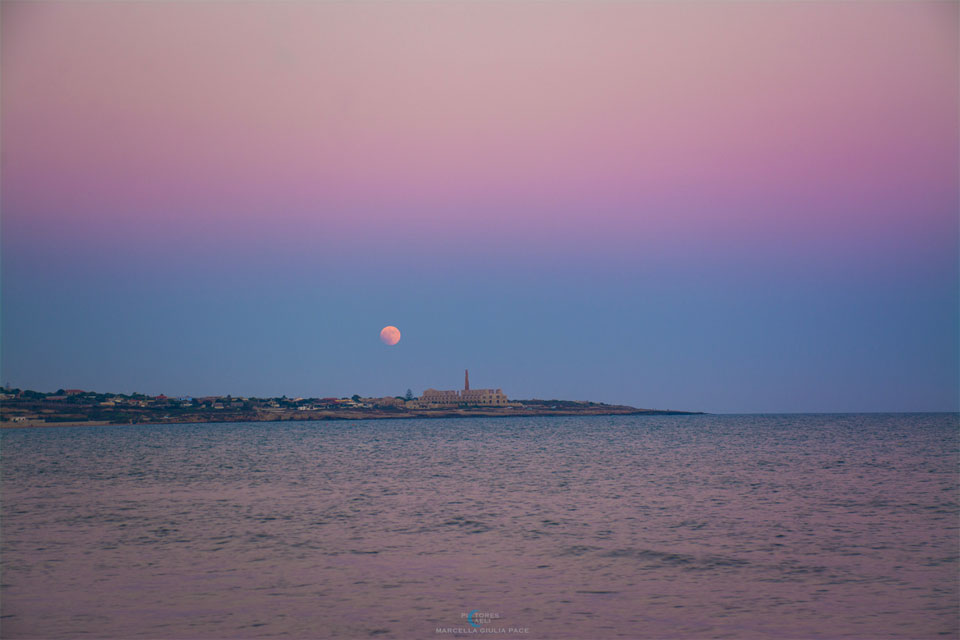
Can you find two Earth shadows in today's image? It's a bit tricky. To find the first shadow, observe that the top part of the atmosphere appears pink and the lower part appears blue. This is because the top half is exposed to direct sunlight, while the lower part is not. The purple area in between is known as the Belt of Venus, even though Venus can only appear on the other side of the sky, near the Sun. The blue color of the lower atmosphere is caused by the Earth blocking sunlight, creating Earth shadow number 1. Now, where is the second Earth shadow? Take a look at the Moon. Do you notice something unusual about the lower left part? That area appears unusually dark because it is in the shadow of the Earth, creating Earth shadow number 2. To be precise, the Moon was captured during a lunar eclipse. This carefully timed image was taken in Sampieri, Sicily, Italy, in July 2018.